
The deepest discount on a reliable washing machine rarely comes from the glossy flyer of a national department store. Searching online for washers on sale near me often leads to frustrating backorders, weeks of transit delays, and unpleasant sticker shock once extra retail fees get added at the register.
If you feel exhausted by climbing retail prices and worry about taking home a discount unit with hidden mechanical damage, you aren't alone. Replacing a broken washer is an urgent household need, and you shouldn't have to gamble your hard-earned budget on mystery clearance stock or wait around for distant fulfillment hubs.
This guide shows you how to find dependable washing machine sales locally while comparing front-load, top-load, and discount inventory with complete confidence. We will examine how to choose the right tub capacity for your household, inspect open-box and scratch-and-dent models on the showroom floor, and secure reliable machines that are ready for your home today.
Key Takeaways
- Explore why regional appliance outlets often hold better physical availability than national big-box chains when searching for washers on sale near me.
- Understand the distinct differences between closeout surplus, open-box returns, and cosmetic scratch-and-dent inventory to secure reliable savings.
- Compare front-load and top-load wash actions to determine which configuration matches your laundry space, cycle habits, and fabric care needs.
- Use an on-site showroom checklist to verify drum balance, door seals, and cosmetic condition before completing your purchase.
- Prepare your home pathways, doorways, and transport equipment in advance to ensure safe handling and smooth installation.
Locating the Best Washers on Sale Near Me: Local Warehouses vs. Big-Box Chains
National home improvement centers build their business model on high retail markups and boxed inventory that frequently lives hundreds of miles away in central distribution hubs. When you walk through a big-box showroom, the floor display you examine might take two or three weeks to arrive at your doorstep. Regional appliance outlets take a completely different approach. By sourcing inventory directly through manufacturer overstock, canceled shipments, and factory closeouts, local warehouses eliminate the retail bloat while keeping physical machines right on the floor.
Searching for washers on sale near me often yields dozens of online listings that appear ready to purchase, yet many national retailers won't reveal backorder delays until after checkout. A local warehouse gives you immediate access to verified units. You can touch the control dials, open the doors, and inspect the physical cabinet before paying a single dime.
Benefits of Sourcing Laundry Appliances Through Regional Outlets
Working with a regional supplier connects you to inventory that serves your immediate area. Nino's Trading Company maintains multi-city regional fulfillment across Little Rock, Fort Smith, Tulsa, and Oklahoma City, allowing homeowners to tap into high-volume stock without waiting for coast-to-coast freight lines. Shopping locally provides clear operational benefits:
- Direct inventory access: Secure closeout and open-box units that are physically stored in regional warehouses rather than distant third-party depots.
- Practical product guidance: Talk with experienced floor staff who understand common regional plumbing requirements, drain line setups, and utility hookups.
- Transparent condition checks: Evaluate cosmetic blemishes on scratch and dent models firsthand, ensuring no unexpected surprises upon arrival.
Why In-Stock Showrooms Beat Online Retail Waiting Lists
A failed washing machine is an urgent problem. Laundry piles up fast, and waiting two weeks for a freight delivery causes massive household disruption. Big-box delivery networks rely on third-party freight couriers, which increases the likelihood of transit damage as units get shuffled between regional cross-docks. Buying an in-stock floor unit allows for same-day inspection and immediate pickup.
Walking a physical warehouse floor lets you compare modern top-loading and front-loading designs side by side. You can measure actual exterior clearances, confirm tub reach depth for family members, and leave with a dependable machine ready to run that evening.
Understanding Washer Discount Categories: Open Box, Scratch and Dent, and Closeouts
Discount tags at national appliance stores often mask what you are actually buying. When homeowners look for washers on sale near me, broad promotional labels tend to blend factory closeouts, customer returns, and cosmetic freight scuffs into a single clearance section. Knowing how regional warehouses classify these units helps you capture substantial value without sacrificing machine performance.
Factory closeouts represent brand-new surplus models. Manufacturers retire certain designs annually to make room for minor cosmetic revisions or updated console layouts. These units remain completely unblemished, arrive in original crating, and carry identical build standards to newly released product runs.
Open Box vs. Traditional Retail Units: What to Expect
Open-box laundry machines typically stem from logistical hiccups rather than mechanical flaws. A homeowner might order a high-capacity machine only to discover during delivery that their utility door is two inches too narrow. Others originate from canceled orders or short retail display rotations. These machines rarely see an actual drop of water, giving you access to premium ENERGY STAR certified clothes washers with direct-drive motors and sanitize cycles while keeping your overall investment manageable.
The Reality of Scratch and Dent Laundry Machines
Cosmetic blemish inventory offers exceptional practical savings. Freight transit occasionally leaves a crease on a back housing or a scuff across a side panel. These imperfections occur strictly on exterior steel shells; the internal pumps, electronic boards, suspension dampeners, and stainless steel wash tubs remain factory standard. Before putting these appliances on the showroom floor, technicians verify that every mechanical assembly operates properly.
- Hidden cabinet sides: Side-panel scuffs naturally disappear once your washer sits between drywall and a companion dryer.
- Basement and utility placement: Dedicated laundry rooms and utility basements prioritize wash performance over flawless side panels.
- Mechanical verification: Direct testing confirms drive belts, water valves, and spin tubs run quietly and balance correctly.
If you want to stretch your laundry budget without taking chances on untested marketplace listings, browse our inventory at ninostrading.com to explore in-stock warehouse units ready for your home.
Comparing Washer Configurations: Front Load vs. Top Load for Regional Homes
Choosing between a front-load and top-load machine shapes your daily laundry routine and impacts utility consumption for years. When browsing washers on sale near me, shoppers often weigh upfront value against ongoing utility efficiency. Your home layout, existing laundry room flooring, and family laundry volume should guide your choice just as much as available sales tags.
Top-load washers remain a standard fixture in regional homes due to their ergonomic loading height and dependable wash actions. In contrast, front-load units utilize horizontal drum rotation, tumbling clothes through water rather than rubbing them against each other. Both configurations offer distinct mechanical advantages depending on how your household handles weekly loads.
Top-Load Washers: Traditional Agitators vs. Modern Impellers
Top-load machines split into two primary drive styles. Traditional central agitators use a finned post to push water and garments through continuous turnover, making them ideal for heavy mud, work uniforms, and dense ranch wear. Modern impeller models replace that central post with a low-profile wash plate at the bottom of the tub. This design creates extra basket space for bulky king-size comforters while using less water. Top loaders also allow you to flip open the lid to drop in forgotten socks mid-cycle without waiting for door seals to unlock.
Front-Load Performance: Water Efficiency and High Spin Speeds
Front-load machines deliver superior moisture extraction by using rapid spin cycles that reach significantly higher revolutions per minute than vertical tubs. Clothes emerge far less damp, which shortens runtime for companion dryers and lowers household energy use. Official ENERGY STAR efficiency data highlights how front-loading horizontal drums cut both water and kilowatt consumption over time through gravity-assisted tumble action.
- Stackable configurations: Front-load pairs can be stacked vertically to free up square footage in narrow hallway closets or shared utility rooms.
- Gentle fabric tumbling: Without a center spindle, delicate items, knitwear, and activewear suffer less stretching and friction wear.
- Floor stability requirements: High-speed spin cycles generate lateral vibration, meaning front loaders perform best on solid concrete slabs or reinforced ground-floor joists.
Taking time to evaluate your laundry space ensures you pick the right format when scouting washers on sale near me across local showrooms.
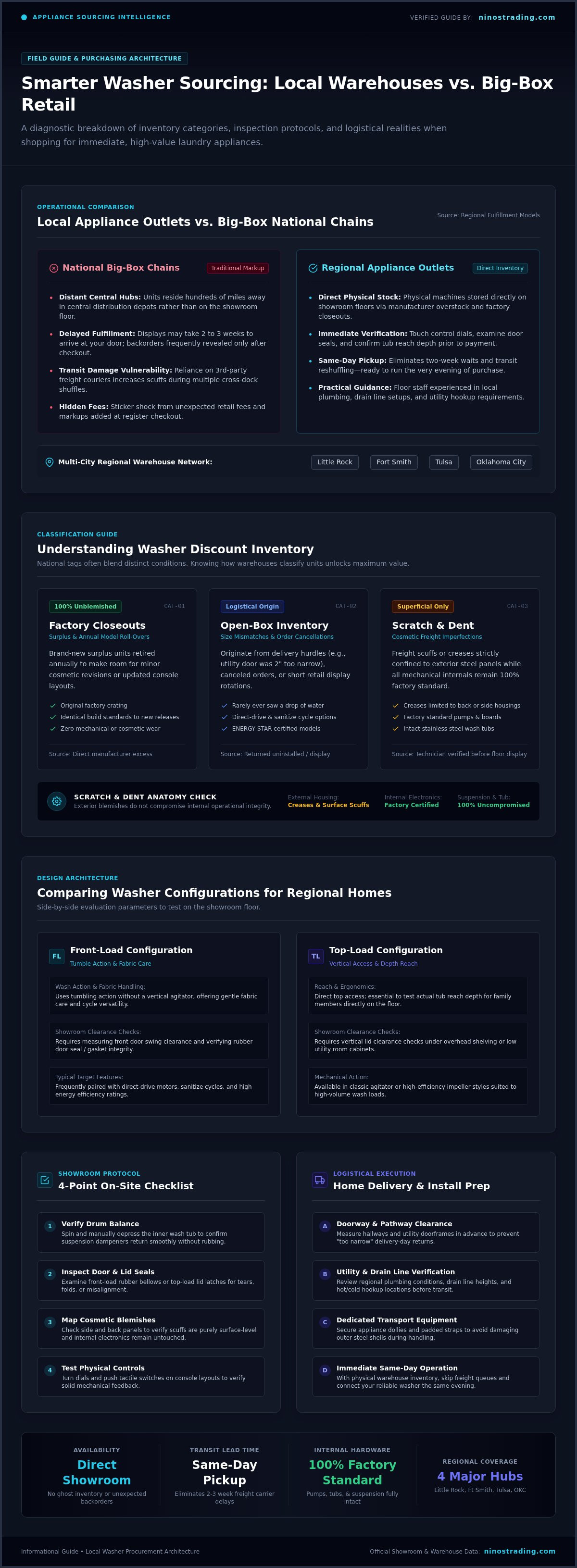
Essential Checklist for Inspecting a Discount Washer in the Showroom
Walking into a warehouse gives you an advantage that online ordering simply cannot match: the ability to run a hands-on diagnostic check. When exploring washers on sale near me, smart shoppers don't just glance at the markdown tag. They run through a structured inspection to ensure every mechanical component functions as intended before arranging transport.
A reputable outlet welcomes thorough scrutiny. Testing hardware elements in person removes any worry about hidden damage, giving you confidence that your purchase will run reliably for years to come.
Physical Hardware Inspection: Drums, Bellows, and Latches
Begin your evaluation right at the wash tub. Open the door and give the stainless steel basket a firm spin by hand. The drum should turn freely with a soft, whisper-quiet glide. Any heavy resistance, metallic scraping, or grinding sounds points to damaged rear bearings or a warped support spider. Next, gently grip the top rim of the inner basket and lift upward. You should feel zero loose play or lateral wobble separate from the outer tub assembly.
- Door seal flexibility: Pull back the folds of the thick rubber boot bellows on front-load machines to check for tears, pinches, or debris accumulation.
- Hinge alignment: Swing the door closed slowly. The heavy latch tongue must strike the strike plate squarely without sagging or requiring an upward lift.
- Dispenser glide: Pull out the detergent tray completely to confirm the internal siphon caps are present and the slide tracks move smoothly.
Verifying Electrical Connections and Plumbing Access
Step behind the machine to examine the utility connections. Inspect the hot and cold water intake valves, paying close attention to the threaded brass or heavy composite couplings. Stripped or cross-threaded fittings will prevent a watertight seal once connected to your home supply hoses. Check that the factory 120-volt power cord remains supple, with an intact grounding prong and no cracked rubber near the stress-relief collar where it enters the chassis.
Locate the lower drain pump filter access panel, which sits along the front base of most front-loading machines. Twist the cap to ensure the housing threads turn easily for routine cleanouts. If you are ready to evaluate dependable floor stock in person, visit a Nino's Trading Company showroom to inspect our latest laundry arrivals firsthand.
Planning Safe Transport, Home Delivery, and Installation in Your Laundry Space
Securing a great deal on a washing machine only solves half the equation. Getting that machine home safely and setting it up properly prevents frustrating leaks, electrical headaches, and structural damage. When looking for washers on sale near me, taking logistical measurements before you visit a warehouse floor ensures the appliance you bring home fits both your physical entryway and your plumbing connections.
Proper transit protects sensitive components. Front-load washers require shipping bolts threaded into the rear chassis during transport to lock the heavy drum in place. Hauling a front loader without these bolts can stretch or snap internal suspension springs over rough roads. Once inside the home, those bolts must be removed before the first cycle, or the uncontrolled drum will violently shake the outer cabinet.
Accurate Space Measurement and Pathway Preparation
A smooth delivery starts with a tape measure at your front entryway. Measure every exterior doorway, tight hallway corner, and basement stairwell along the delivery path. If clearance is tight, taking interior doors off their hinges often yields the extra inch needed to avoid scuffing drywall. Within the laundry space itself, allow at least one inch of side clearance between machines and six inches of rear clearance to prevent kinked hoses.
- Floor stability checks: Verify that subflooring is solid; upper-level installations require sturdy, level joists to absorb dynamic spin movement.
- Leveling leg adjustments: Use a spirit level on top of the cabinet, rotating the threaded feet until the machine rests flat without rocking.
- Hose upgrades: Discard aged black rubber hoses in favor of braided stainless steel lines, which resist high-pressure bursts.
Hookup Requirements: Valves, Outlets, and Drainage
Your laundry nook requires specific utility infrastructure to operate smoothly. Check behind your current unit to confirm that hot and cold shutoff valves turn freely and shut off completely without weeping. Building standards typically require a dedicated 20-amp, 120-volt grounded three-prong electrical outlet within reach of the factory cord. Avoid using extension cords, which can overheat under high motor loads.
Finally, inspect the home drain standpipe. The open drain pipe should stand between 30 and 96 inches off the floor to prevent premature siphoning while staying within pump discharge limits. If you are ready to explore reliable, in-stock options ready for immediate loading or prompt home arrival, visit Nino’s Trading Company to browse dependable in-stock laundry appliances across our regional showrooms.
Upgrade Your Laundry Room with Local Confidence
Finding the right laundry setup comes down to verified physical inventory, accurate entryway measurements, and understanding how appliance discount tiers work. When you bypass the long delivery queues of national department stores and search for washers on sale near me through regional outlets, you gain the freedom to inspect drum bearings, door seals, and cosmetic condition before paying. Choosing between top-load convenience and front-load efficiency becomes straightforward once you can compare both styles in person.
Take control of your laundry routine without waiting weeks for a backordered freight shipment. Find high-quality washers on sale at Nino’s Trading Company, where you can browse an expansive regional inventory across our Arkansas and Oklahoma showrooms. Our team carefully inspects our open-box, closeout, and scratch-and-dent appliances so you can buy with total peace of mind. With immediate local warehouse stock available for fast pickup or prompt regional fulfillment, you can bring home a dependable washing machine today.
Frequently Asked Questions
Can I safely transport a washing machine lying on its side in a truck bed?
Transporting a washing machine on its side is strongly discouraged because it risks severe internal damage. The internal wash tub is suspended by heavy-duty springs and shock absorbers designed strictly for vertical movement. Laying the unit flat causes the heavy inner drum to strain or bend the suspension brackets, warp the outer housing, and loosen internal electrical wiring. Always haul washing machines upright, secured tightly with ratchet straps against a truck bed wall or trailer rail.
What is the main difference between an open-box washer and a used model?
An open-box washer is a newly manufactured unit that has never been put into regular residential service, whereas a used machine has endured ongoing cycle wear from previous owners. When shoppers look for washers on sale near me across Northwest Arkansas or Oklahoma showrooms, open-box stock typically represents customer returns due to doorway sizing issues, cancelled freight shipments, or short floor display cycles. These appliances feature factory-fresh internal motors, pumps, and electronics rather than aged components.
Are scratch and dent washers covered by functional performance guarantees?
Coverage policies vary depending on the retailer and individual brand terms, so buyers should always confirm operational testing standards and available protection coverage with showroom staff before purchase. Reputable regional warehouses inspect scratch and dent inventory to verify that all motors, spin mechanisms, and electrical consoles run properly. While the exterior metal may show cosmetic dings, the machine itself is verified mechanically functional so you don't bring home unexpected operational defects.
How much clearance space is needed behind a washing machine for hookups?
You should allow approximately four to six inches of clearance behind the washer to accommodate water inlet hoses, drain standpipes, and electrical connections safely. Jamming the unit flush against drywall puts harsh bends on hot and cold intake lines, which restricts water flow and creates premature fatigue in hose fittings. Leaving adequate rear space also prevents drain hoses from kinking, ensuring your washer empties smoothly without triggering cycle pause errors.
Do front-load washing machines require special high-efficiency detergent?
Yes, front-load washers require High-Efficiency (HE) detergent formulated specifically for low-water wash environments. Standard laundry detergents generate excessive suds that cannot rinse out properly in horizontal tumbling drums, leading to soap residue buildup, fouled water-level pressure sensors, and sour mildew smells around the rubber door seal. HE detergents produce low-foaming suds that rinse clean while protecting the internal pump assemblies and keeping your drum interior fresh.
Why must shipping bolts be removed from a front-load washer before running a cycle?
Shipping bolts secure the suspended wash tub rigid against the outer steel chassis to prevent transit damage on the road. If you run a cycle with the bolts still inserted, the tub cannot flex or absorb rotational energy. During the high-speed spin cycle, this rigid lock creates violent shaking that can rip the mounting bracket apart, bend the frame, crack your laundry floor, and permanently damage the drive motor on the first wash.
How often should washing machine water supply hoses be replaced?
Washing machine water supply hoses should generally be inspected annually and replaced every three to five years to prevent catastrophic leaks. If you are browsing washers on sale near me to replace an older setup, swapping out traditional rubber hoses for braided stainless steel lines is an essential safeguard. Braided lines provide high burst resistance against municipal water pressure spikes across Arkansas and Oklahoma municipal water systems.


