
A shallow crease on a side cabinet doesn't stop a compressor from keeping your groceries cold. Still, when shopping for a scratch and dent refrigerator, it is completely natural to wonder whether you are uncovering a genuine bargain or taking on someone else's mechanical headache. Hesitation around hidden cooling failures, confusing warranty terms, and the gamble of buying sight-unseen from distant freight shippers makes that caution understandable.
You shouldn't have to risk your household budget on a questionable appliance just to get a fair deal. In this guide, you will learn how cosmetic transit blemishes actually impact internal cooling mechanics, giving you the confidence to separate harmless aesthetic flaws from functional liabilities. We will break down the differences between open-box, refurbished, and dented inventory, provide a practical showroom inspection checklist you can follow in person, and show you how to secure a dependable brand-name refrigerator well below typical retail costs.
Key Takeaways
- Learn how transit handling causes surface scuffs and why exterior blemishes rarely interfere with a sealed cooling system.
- Master a straightforward showroom inspection checklist to verify that a scratch and dent refrigerator retains complete mechanical integrity.
- Clarify the critical distinctions between open-box, refurbished, and cosmetically blemished inventory to match your exact household needs.
- Identify high-priority inspection points, such as magnetic door gasket seals and lower rear panels, that matter far more than minor side creases.
- Discover the practical benefits of evaluating appliances in person at regional warehouse showrooms to avoid the risks of sight-unseen freight shipping.
What Is a Scratch and Dent Refrigerator and How Does It Occur?
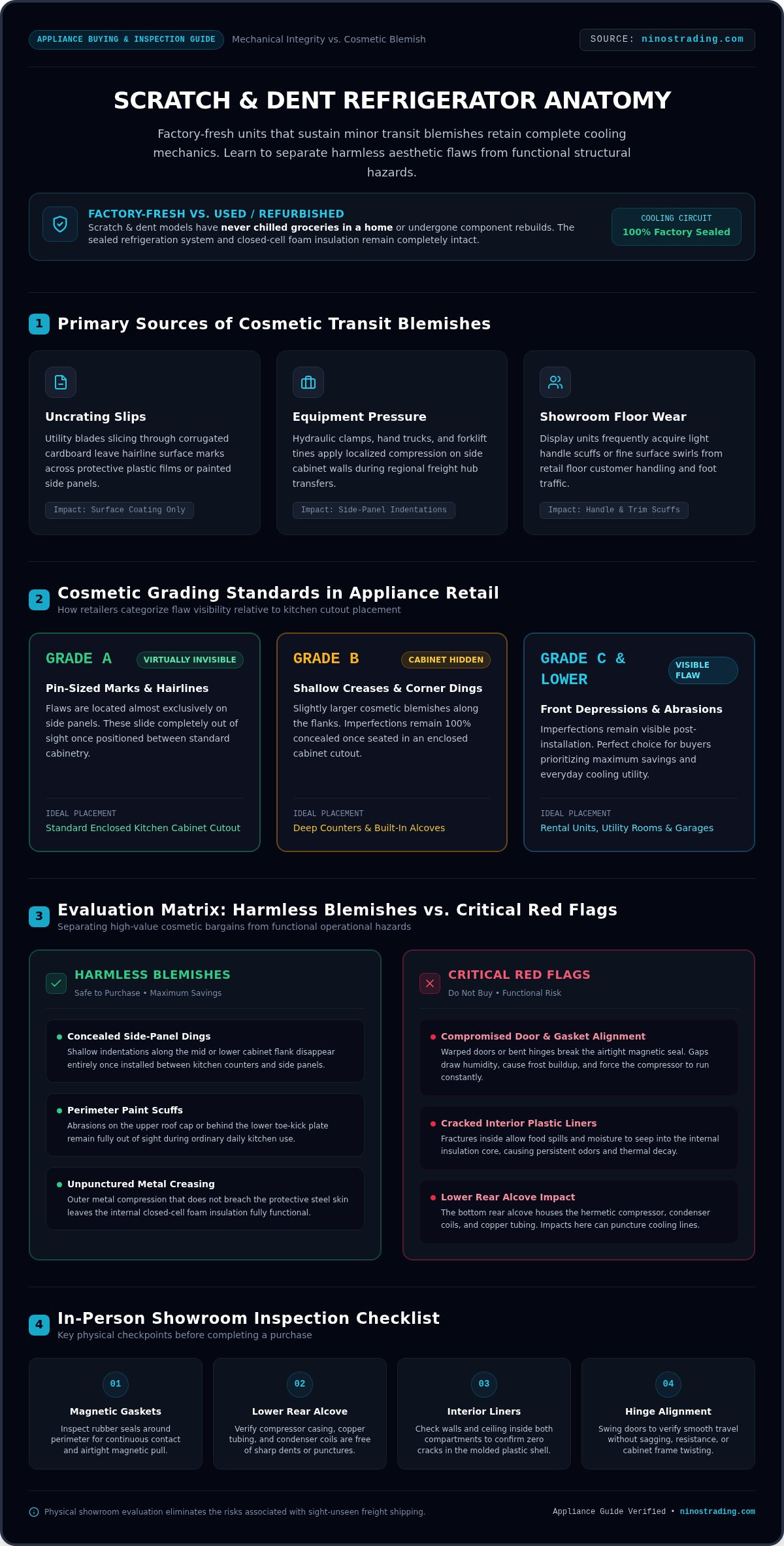
A scratch and dent refrigerator is a factory-fresh unit that sustained minor exterior blemishes during distribution, leaving its internal cooling systems completely intact. Unlike used or refurbished models, these units have never chilled groceries in a home or undergone component rebuilds. As a heavy major appliance, a refrigerator travels through a complex logistics chain of distribution hubs, shipping containers, and loading docks. When a carton gets bumped or punctured, big-box retailers cannot display the item on traditional sales floors. Understanding where these blemishes originate helps you identify authentic cosmetic surplus and avoid genuine structural damage.
Common Sources of Cosmetic Appliance Imperfections
Cosmetic flaws almost always trace back to standard handling equipment and packaging removal rather than operational defects. The most frequent culprits include:
- Uncrating slips: Utility blades can slice through thick corrugated cardboard and leave hairline surface marks across protective film or painted side panels.
- Handling equipment pressure: Hydraulic clamps, hand trucks, and forklift tines can leave localized indentations on side walls during regional freight transfers.
- Showroom floor wear: Display units frequently acquire light handle scuffs or fine surface swirls from regular foot traffic and customer handling.
Cosmetic Grading Standards in Appliance Retail
Appliance warehouses often use simple cosmetic grading systems to help shoppers gauge blemish visibility against their kitchen layouts:
- Grade A: These units feature pin-sized marks or faint hairline scratches. The flaws are almost exclusively on side panels, which slide invisibly between standard kitchen cabinets.
- Grade B: Inventory carries shallow side creases or minor corner dings. These imperfections remain entirely hidden once the refrigerator sits inside an enclosed cabinet cutout.
- Grade C and lower: Models exhibit front-door depressions or noticeable surface abrasions. Because these flaws remain visible after installation, they work best for rental properties, secondary utility rooms, or buyers prioritizing everyday utility over spotless styling.
Cosmetic Imperfections vs. Mechanical Risks: Evaluating What Truly Matters
Shallow scuffs on outer sheet metal do not touch the sealed refrigeration system. A modern scratch and dent refrigerator uses insulated outer walls to guard delicate components, meaning most surface impacts remain entirely cosmetic. However, separating harmless exterior blemishes from functional hazards is critical to protecting your investment. If a dent interferes with a moving hinge, compresses cooling lines, or twists the cabinet frame, a steep discount can quickly turn into poor cooling and elevated electric bills. Understanding federal guidance on consumer appliance warranties helps clarify what coverage remains intact for functional defects versus cosmetic exceptions on discounted stock.
Harmless Blemishes That Deliver Maximum Value
Certain flaws offer the deepest price relief without posing any risk to daily operation:
- Concealed side-panel dings: Shallow indentations along the lower or mid-flank of the cabinet disappear once slid between countertops and cabinets.
- Perimeter scuffs: Paint scrapes along the upper roof cap or behind the lower toe-kick plate remain out of sight during ordinary use.
- Minor exterior creases: Metal compression that does not puncture the protective steel shell leaves the closed-cell foam insulation completely functional.
Critical Red Flags to Avoid in Clearance Units
Some structural defects threaten internal performance and should disqualify a clearance unit immediately:
- Compromised door alignment: A warped door or bent hinge prevents magnetic gaskets from creating an airtight seal. Gasket gaps pull in ambient humidity, resulting in heavy frost buildup and forcing the cooling unit to run constantly.
- Cracked interior liners: Fractures in the inner plastic lining allow food spills and moisture to seep into the internal insulation core, causing odors and gradual thermal degradation.
- Lower rear impact damage: The bottom back alcove houses the hermetic compressor, condenser coils, and copper tubing. Sharp impact punctures or caved-in service covers can bend copper lines, crimp solder joints, or restrict condenser airflow.
Taking a few minutes to inspect floor models in person at a showroom like Nino's Trading Company gives you the peace of mind that comes from verifying mechanical components with your own eyes before arranging pickup.
How to Inspect a Scratch and Dent Refrigerator: A Step-by-Step Checklist
Evaluating a scratch and dent refrigerator in person gives you a major advantage over online liquidators who only supply static stock photos. Running through a quick, disciplined physical inspection guarantees you walk away with pristine cooling performance while leaving cosmetic worries behind. Take your time, bring a small flashlight, and follow this hands-on evaluation before loading an appliance into your truck.
Exterior Seal and Hardware Integrity Checks
Start with the cabinet frame, door alignment, and gaskets before opening the doors:
- Perform the dollar-bill test: Close the refrigerator door on a dollar bill along multiple points around the perimeter gasket. If the bill pulls out easily with zero drag, the seal is loose or the door frame is twisted. Firm resistance indicates an airtight barrier.
- Check door swing and hinges: Open doors and freezer drawers fully. They should swing true and latch flush without needing a physical lift. Confirm all hinge mounting screws sit tight against the cabinet frame.
- Inspect leveling legs: Ensure the front leveling feet turn freely and aren't sheared or bent, which is vital for proper interior drainage and natural door closure.
Interior Component and Electrical Assessment
Step inside the cabinet to verify structural plastic and essential accessories:
- Check mounting points and tracks: Examine cantilever glass shelf brackets, door bins, and crisper slide tracks. Run your fingers along plastic corners to catch any hidden stress fractures caused by sudden transit jarring.
- Test the control board: Ask the showroom team to plug the unit into power. Confirm digital temperature touchpads light up, react instantly to input, and don't flash diagnostic error codes.
- Audit included components: Make sure standard factory parts like the ice storage bucket, water filter bypass cap, and toe-kick plate are present rather than misplaced during warehouse uncrating.
Lower Mechanical Bay Examination
Walk around to the back and look through the lower vented service cover near the floor:
- Inspect copper tubing: Use a flashlight to check the refrigeration lines entering and exiting the compressor. Copper lines should show smooth curves without sharp pinches, kinks, or oily residue that could signal a micro-leak.
- Examine the condenser fan: Spin the condenser fan blade manually while the unit is unplugged. The blade should rotate silently without scraping against surrounding metal cowlings.
- Verify the condensation drain pan: Ensure the plastic drain pan seated beneath the compressor sits level and remains free of cracks so defrost runoff stays safely contained.
Scratch and Dent vs. Open-Box vs. New: Weighing Your Options
Choosing between brand-new boxed units, open-box inventory, and clearance stock comes down to your kitchen floor plan and household priorities. Brand-new refrigerators offer flawless cosmetic finishes straight from the factory crate, but they also carry standard retail markups. Smart shoppers recognize that paying a premium for pristine sheet metal nobody will ever see is rarely the best use of a renovation budget. Matching the condition tier to your specific room setup keeps costs down while preserving day-to-day cooling performance.
Understanding Key Differences Across Discount Tiers
Evaluating how an appliance entered the clearance pipeline helps you choose the right balance of appearance and price:
- Factory-sealed new: These models arrive in unopened manufacturer packaging with pristine exterior panels and zero handling marks, backed by full retail pricing.
- Open-box inventory: These appliances typically come from customer fitment returns or delivery cancellations. A homeowner might discover the unit is two inches too tall for their doorway, prompting an immediate return before the refrigerator was ever plugged in. They show virtually no cosmetic wear but cannot be sold as boxed inventory.
- Scratch and dent units: These are brand-new, unused appliances that incurred superficial transit marks or side-panel creases during distribution. They trade exterior perfection for substantial budget relief while keeping internal cooling systems in mint condition.
Matching Appliance Condition to Kitchen Layout
Your room layout should dictate which condition grade you bring home:
- Enclosed cabinet cutouts: Most residential kitchens position the refrigerator between deep surrounding cabinets or drywall alcoves. When side panels remain completely hidden from view, purchasing a scratch and dent refrigerator with flank scuffs gives you premium features without displaying a single mark.
- Exposed end panels and open layouts: If your floor plan leaves one side of the appliance visible to dining or living areas, look for open-box stock or clearance units where blemishes sit along the top cap or rear perimeter.
- Secondary storage and utility rooms: For garages, workshops, or rental units, exterior styling carries zero practical weight. Heavily marked units deliver complete everyday cooling reliability at the lowest possible cost.
Before paying full price for untouched sheet metal, shop available refrigerator inventory at Nino's Trading Company to discover the right balance of condition and value for your home.
Finding Quality Discount Refrigerators Across Arkansas and Oklahoma
Shopping for a clearance appliance online often feels like a gamble, especially when cross-country freight shipping can result in unexpected handling damage or long curbside delays. For homeowners across Arkansas and Oklahoma, bypassing distant digital liquidators in favor of regional retail warehouses provides practical peace of mind. Stepping onto a local warehouse floor allows you to inspect each unit firsthand, verify cosmetic imperfections in person, and arrange immediate pickup or regional delivery so your kitchen remains fully operational without weeks of waiting.
The Advantage of In-Person Showroom Inspection
A physical showroom removes the uncertainty of low-resolution catalog pictures. When evaluating a scratch and dent refrigerator in person, you can confirm whether a side-panel scuff will be hidden by your kitchen cabinets or if a small ding sits directly at eye level. Beyond checking cosmetic placement, visiting a physical location eliminates the headaches of long-distance freight returns, which often involve complex logistics and restocking disputes. Working directly with local warehouse specialists also gives you clear insight into weekly inventory turnover, helping you spot freshly uncrated models as soon as they reach the sales floor.
Regional Availability at Nino’s Trading Company
Finding dependable clearance appliances is straightforward when you have access to dedicated distribution warehouses throughout the region. Rather than wondering what condition your scratch and dent refrigerator will arrive in from a distant carrier, you can inspect every corner before making a decision. Regional retail operations make this simple by maintaining deep showroom stock close to home:
- Extensive local reach: Warehouses serve Little Rock, Fort Smith, and Northwest Arkansas, alongside locations in Tulsa, Broken Arrow, and Oklahoma City.
- High-turnover selection: Steady arrivals provide a wide range of brand-name French door, side-by-side, and top-freezer layouts.
- Direct verification: You examine the exact appliance you intend to purchase rather than relying on generic stock photography.
Whether you need a primary kitchen centerpiece or a secondary utility unit, explore verified warehouse deals by visiting Nino’s Trading Company to select the right refrigerator for your home.
Upgrade Your Kitchen With Practical Confidence
Saving money on home appliances doesn't mean sacrificing cooling performance or long-term reliability. By distinguishing harmless transit scuffs from structural defects, you can inspect door gaskets and mechanical bays with total confidence. Choosing a scratch and dent refrigerator allows you to bring home premium features while keeping your household budget intact.
Rather than taking chances on cross-country freight shipping, shopping locally puts you in control. Nino's Trading Company operates convenient warehouse locations across Arkansas and Oklahoma, offering spacious showrooms where you can evaluate appliances in person. With diverse inventory arriving regularly, including popular French door and side-by-side layouts from top brands, you can easily verify every detail before buying. Take the guesswork out of your next purchase when you find quality scratch and dent refrigerators at Nino’s Trading Company and secure a dependable appliance built to serve your family for years to come.
Frequently Asked Questions
Do scratch and dent refrigerators come with warranties or protection plans?
Warranty coverage depends on the specific appliance and manufacturer policies, but many units retain functional coverage on essential cooling components. While cosmetic imperfections aren't covered under standard terms, mechanical systems like compressors and evaporators often stay protected. Retailers may also offer store-backed protection plans to give you extra security. Always verify the written warranty documentation for your specific unit before completing your purchase so you know exactly what is covered.
Will cosmetic dents on the outside of a refrigerator impact energy efficiency?
Minor dents on exterior side panels or door skins won't impact energy efficiency as long as the door gaskets seal properly. Modern cabinets use thick, rigid foam insulation that absorbs shallow exterior bumps without puncturing the interior liner. As long as cold air doesn't leak past warped hinges or loose magnetic seals, your scratch and dent refrigerator will run at its intended factory efficiency and keep utility bills steady.
Can cosmetic scratches on a stainless steel refrigerator be buffed out or repaired?
Light hairline scuffs on genuine stainless steel can often be reduced using fine abrasive pads or commercial scratch-repair kits worked along the direction of the metal grain. However, coated or fingerprint-resistant finishes shouldn't be buffed, as abrasives can strip the protective top layer. For deeper marks or coated steel, homeowners often use specialized appliance touch-up paint or position the unit so kitchen cabinets conceal the flaw.
What is the main difference between an open-box refrigerator and a scratch and dent unit?
The distinction comes down to why the unit left standard retail distribution. An open-box refrigerator is typically a pristine return, often sent back because a customer mismeasured their kitchen entryway or changed their mind before use. A scratch and dent appliance is a brand-new model that incurred exterior surface marks during freight handling or uncrating. Both deliver substantial savings, but open-box stock focuses on packaging condition while dented units trade cosmetic blemishes for value.
How can I ensure the doors and seals are aligned properly on a dented model?
You can verify seal integrity by closing the refrigerator door on a dollar bill along multiple points around the perimeter gasket. If the bill pulls out freely with zero resistance, the seal isn't making airtight contact, which signals a misaligned frame or warped hinge. Step back a few feet to check that doors hang square and plumb, and confirm that both doors swing shut smoothly without needing manual lifting.
Are scratch and dent appliances customer returns or brand new units?
Authentic scratch and dent stock consists of brand-new, factory-built appliances that have never chilled food in a home. These models sustain handling scuffs, clamp marks, or exterior carton punctures during forklift transit or distribution transfers. Because the unit hasn't seen household use, the internal compressor, wiring, and fans remain in fresh factory condition, giving you the reliability of a new appliance without the traditional retail price tag.
Can I inspect the exact refrigerator before arranging delivery or pickup?
Yes, visiting a regional warehouse showroom lets you inspect the specific appliance you plan to take home. Retailers like Nino's Trading Company display physical floor stock across Arkansas and Oklahoma, giving shoppers in Little Rock, Fort Smith, Tulsa, and Oklahoma City direct access to evaluate every blemish. Inspecting the actual unit in person eliminates freight guesswork and ensures the dimensions and appearance match your kitchen needs perfectly.


