

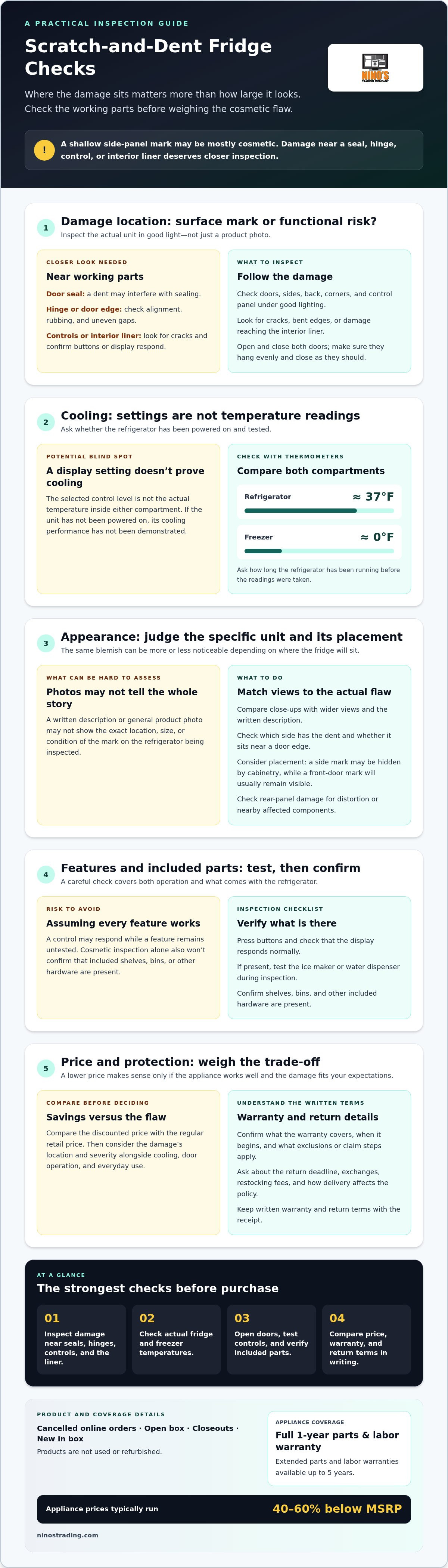
A dent’s location matters more than its size when you’re deciding whether a scratch-and-dent fridge is a sensible buy. Knowing what to check on a scratch and dent fridge means looking beyond the visible blemish: damage near the door seal, hinges, or control panel deserves closer attention than a shallow mark on a side panel. The fridge should also cool properly, and its doors should close and seal as they should.
A lower price can make cosmetic damage easier to accept, but the discount only makes sense if the appliance works well and the damage doesn’t interfere with everyday use. It’s reasonable to want a clear, practical way to weigh the trade-offs before you buy.
This guide covers the main checks, including the location and condition of cosmetic damage, cooling performance, the discount, door seals, hinges, and hardware. You’ll know what to inspect in person and which problems deserve a closer look before making your decision.
Key Takeaways
- Identify what caused the cosmetic damage, and focus on where it is: dents near seals, hinges, or controls need closer inspection than marks on a side panel.
- Check the warranty terms and understand what coverage applies before deciding whether the price makes sense.
- Ask whether the refrigerator has been tested for cooling; aim for about 37°F in the fridge and 0°F in the freezer.
- Compare the discounted price with the regular retail price, then weigh the savings against the location and severity of the blemish.
- Open and close the doors, inspect the seals and hinges, and make sure shelves, bins, and other included hardware are present.
1. What Are Scratch and Dent Appliances?
Scratch-and-dent appliances have cosmetic imperfections, such as a visible mark or dent. Across the broader market, these flaws can result from shipping damage, warehouse handling, open-box returns, or damaged packaging. Sometimes, transit damages only the box, while the refrigerator itself remains unmarked. The label describes the appliance’s condition, but it doesn’t explain the cause or show whether the damage affects use.
Start by inspecting the actual refrigerator, not just a general product photo. Look at the doors, sides, back, corners, and control panel under good lighting. Note each scratch, dent, or scuff and where it sits. A shallow mark on a side panel may be easy to live with, while a dent near a door seal or hinge needs more attention. Ask what caused the cosmetic damage and whether the appliance was tested before sale.
Warranty coverage is a separate factor from appearance. Ask whether the manufacturer’s warranty applies, what it covers, and when coverage begins. Warranty arrangements vary among retailers and appliances, so don’t assume one store’s terms apply everywhere. For appliances sold here, a full 1 year parts and labor warranty comes standard, with extended parts and labor warranties available up to 5 years. Get the applicable terms in writing, including covered parts, labor, exclusions, and claim steps.
An extended warranty may add protection for covered internal components, but it doesn’t repair cosmetic damage. Read the written terms so you know which problems qualify and what steps apply if a covered part fails. If you’re also looking at a washer, use the same approach: identify the appliance, covered components, and warranty period in the paperwork. Keep those details with your receipt for reference after purchase.
Ask about the return and exchange policy before paying. Find out the return deadline, whether an exchange is allowed, whether restocking fees apply, and how delivery affects the process. A clear policy matters if the refrigerator doesn’t cool as expected after delivery. Keep a copy of the written warranty and return terms together. The goal is to understand both the visible cosmetic damage and the practical protections attached to the purchase.
2. Does Cosmetic Damage Affect Refrigerator Performance?
A scratch or dent doesn’t automatically affect how an appliance functions. To assess whether damage affects performance or safe operation, inspect the door alignment, seal, control panel, and interior liner, then confirm the controls respond and the refrigerator cools. A flaw near one of these parts deserves closer attention than a surface scuff away from working components.
Location often matters more than the size of an imperfection. A broad, shallow dent on a side panel may be less concerning than a smaller dent that keeps a door from closing evenly. Damage near a hinge can affect how the door hangs, while a dent near the gasket may interfere with the seal. Cracked panels, bent edges, or damage that reaches the interior liner call for careful inspection.
Consider where the refrigerator will sit before deciding whether a blemish will remain visible after installation. A scratch on the side may be hidden by cabinetry, while a mark on the front door will usually stay in view. Rear-panel damage may face a wall, but check that it hasn’t distorted the panel or affected nearby components. Measure and picture the planned placement, then compare it with the damage location.
Use photos and written descriptions to understand the specific unit, not just the model. Look for clear images of each marked area, including close-ups and wider views that show where the damage sits. Match the photos to the written description. If it says “side dent,” check which side and whether it’s near the door edge. A mismatch or missing view makes it harder to judge appearance and function.
At the appliance, examine the cosmetic damage from several angles. Check for cracks in the interior liner and cracks in a digital control panel. Press the buttons and confirm the display responds normally. Open and close the doors, watching for rubbing, uneven gaps, or a door that won’t stay aligned. If an ice maker or water dispenser is present, test its operation as well.
A cosmetic mark that leaves the door, seal, controls, and interior intact may be mainly an appearance issue. The reason for closer scrutiny is that a dent can conceal structural distortion, especially around functional parts. Compare the actual unit with its photos and description, then decide whether the visible imperfection fits your space and expectations. For another look at available scratch and dent refrigerators, browse the selection before making your choice.
3. Inspecting refrigerator and freezer temperatures
Ask the retailer to plug in the refrigerator and test cooling before purchase. Use an appliance thermometer to check whether the refrigerator is around 37°F and the freezer around 0°F. If those temperatures aren’t reached, the unit may have a cooling problem that an exterior inspection won’t reveal. Knowing what to check on a scratch and dent fridge includes confirming that both compartments cool, not just checking the display settings.
A control setting shows the selected level, not the actual temperature inside each compartment. Place a thermometer in the refrigerator and another in the freezer, then compare the readings with the targets above. Ask how long the appliance has been running before the test. If it hasn’t been powered on, its cooling performance hasn’t been demonstrated.
Test an ice maker or water dispenser if the refrigerator has either feature. Confirm the controls respond and observe whether the feature operates during the retailer’s inspection. If it isn’t tested, that function remains unassessed. Inspect freezer drawers and shelves for cracks, and look over glass surfaces for chips, fractures, or loose edges that could affect everyday use.
Examine visible dents and scratches alongside the cooling results. Look closely at the back and sides for bent panels, cracked surfaces, or marks that appear to reach beyond the outer finish. Check inside for cracks in the liner. These signs don’t establish what happened, but they identify areas for closer inspection. A retailer’s operation test offers more insight into cooling than appearance alone.
Inspect both door seals for tears, looseness, or sections that don’t sit flat against the cabinet. Close each door and check that it meets the frame evenly. A damaged gasket or misaligned door can make it harder to maintain temperature, so compare the seal’s condition with the thermometer readings. This is another practical part of what to check on a scratch and dent fridge before buying.
To spot possible hidden damage or prior repairs, inspect the interior, rear panel, and visible connections for cracks, bent metal, loose parts, or uneven repairs. Compare the unit with its model information and damage description. A visual check can reveal warning signs, but cooling tests show whether it operates properly.
Find the model and serial number on the appliance’s identification label. Match the exact model to its energy label, then use the model details to check current recall notices. Don’t rely on a similar model name, since a small difference in the number can identify another version.
At delivery, inspect the refrigerator before installation. Check the doors, seals, glass shelves, interior liner, and exterior panels. Compare the delivered unit with the one you selected, and photograph any new damage before moving it into place.
4. Comparing the discount with the regular retail price
A marked-down price only shows value when you compare it with a fair reference price. Start with the exact refrigerator model, then compare its discounted price with the manufacturer’s suggested retail price, or MSRP. Check the model number carefully, since similar versions can have different features. Appliance prices here typically run 40 to 60% below MSRP, but the specific model and condition still matter.
Use the same model for a useful comparison. A refrigerator with a different finish, capacity, dispenser, or feature package may have a different regular price. Compare the same configuration, not simply another refrigerator from the same brand. If you can’t find a close match, treat the comparison cautiously and focus on whether the features you need justify the asking price.
Calculate the discount by subtracting the offered price from the reference price, then dividing the difference by the reference price. Convert the result to a percentage. This makes it easier to compare two dented refrigerators with different original prices. A larger percentage doesn’t automatically mean better savings if the damage is more visible or the model lacks features you want.
Check what price the comparison actually represents. MSRP is a manufacturer’s suggested price, while a retailer’s regular selling price may be different. Compare the refrigerator with current prices for the same model and configuration, rather than relying only on a crossed-out label. Record both figures and the source of the comparison, so you can see whether the discount reflects a meaningful difference.
Next, weigh the savings against the specific cosmetic damage and your kitchen layout. A scratch on a side that will be hidden after installation may matter less to you than a dent on the front. A flaw near the door or control area deserves more attention because function matters alongside appearance. Include missing shelves or bins in your decision, since replacing an essential part can reduce the value of the discount.
Finally, compare the discounted price with the full purchase terms, not just the sticker. Consider the written warranty and return or exchange policy, then factor in delivery and any applicable fees shown before purchase. The refrigerator’s tested operation also matters: a low price is less compelling if cooling performance hasn’t been demonstrated. Decide what you’re willing to accept before buying, and use the same criteria for each model you’re considering.
5. Checking door seals, hinges, and hardware
A refrigerator can have a cosmetic dent and still work properly, but damage around a door can affect how it closes. Inspect the seal, hinge, and door alignment together. Open and close each refrigerator and freezer door several times. Notice whether it moves smoothly, rubs against the cabinet, or needs extra force to latch. A door that sits unevenly deserves closer attention than a shallow mark away from its moving parts.
Run your eyes and fingers along each gasket, the flexible seal around the door. Look for tears, loose sections, flattened spots, or corners that pull away from the frame. Close the door and check that the gasket meets the cabinet evenly from top to bottom. A gap or damaged section can make it harder to maintain temperature. Don’t dismiss a loose seal as a minor cosmetic flaw.
Next, inspect each hinge while opening and closing the door. Look for bent metal, visible cracks, loose fasteners, or a hinge that shifts as the door moves. Compare the gap around the door with the gap on the opposite side. If a dent sits near the hinge, check whether the panel looks bent or the door hangs lower on that side. Such signs can point to alignment trouble and may require repair.
Check the handles and other visible hardware, too. Pull each handle gently to see whether it feels secure, and examine its attachment points for cracks or movement. Inspect hinge covers, shelf supports, drawer slides, and door bins for missing or broken pieces. Confirm shelves and bins sit firmly in their slots. Hardware that is loose, absent, or difficult to operate can affect daily use, even if the refrigerator cools properly.
Use this sequence before buying: inspect the gasket, test each hinge, open and close both doors several times, then check handles and interior hardware. Pay special attention to dents that change door alignment or interfere with sealing. A damaged gasket or hinge can reduce efficiency and contribute to temperature problems. If the door won’t close smoothly or the seal doesn’t sit flat, factor that condition into your decision rather than judging the refrigerator by appearance alone.
Shoppers comparing scratch-and-dent refrigerators can use these checks to distinguish a surface blemish from a door-function concern. Buyers should also match included shelves and bins against the appliance’s interior before arranging delivery. Explore refrigerator options and use this inspection sequence when comparing units.
Nino's Trading Company: Refrigerators
Nino's Trading Company sells refrigerators in scratch-and-dent, open-box, closeout, cancelled online order, and new-in-box condition. These are not used or refurbished appliances, giving shoppers options to compare cosmetic condition and value.
Use the checks in this guide when comparing refrigerators: look over the damage, test cooling, assess the door seals and hinges, and review the written warranty terms. A refrigerator with a cosmetic blemish may suit your kitchen if the damage is acceptable and the appliance works as expected. If a dent affects the seal, alignment, or controls, prioritize those functional concerns over appearance.
Visit Nino's Trading Company online to explore refrigerator options, or contact the company with questions about its appliances.
Make Your Next Appliance Choice With Confidence
Keep your notes on what to check on a scratch and dent fridge handy as you compare options. The right choice should fit your kitchen, your comfort with the visible blemish, and the way you expect to use the appliance. If a refrigerator doesn’t meet your standards, it’s fine to keep looking rather than settle for a compromise.
Nino's Trading Company offers refrigerators, along with washers and dryers and TVs, for shoppers considering other household appliances too. When you’re ready to explore your options or discuss a purchase, contact Nino's Trading Company. Take your time, use the checks that matter to you, and choose an appliance you’ll feel good bringing home.
Frequently Asked Questions
What Are Scratch and Dent Appliances?
Scratch-and-dent appliances are usually new or lightly handled units with cosmetic flaws or packaging damage. The label describes the condition being sold, but it doesn’t explain how the mark happened or whether every accessory is included. Treat the refrigerator’s condition, included parts, and paperwork as separate details. A scuffed cabinet, for example, doesn’t tell you whether shelves, bins, and the ice maker components are all present.
Can I ask to see documentation of the specific damage before buying?
Yes. Ask to see clear photos and a written description of the specific unit’s damage before paying. Check that the images show the full refrigerator as well as close-ups, so you can identify where each mark sits. Keep the photos and description with your purchase records. If the delivered appliance looks different from the documented condition, those records help you describe the difference clearly.
Does Cosmetic Damage Affect Refrigerator Performance?
Cosmetic damage doesn’t necessarily affect performance, but damage near functional parts can. A dent on a side panel may be only an appearance issue, while a bent door edge could interfere with alignment or sealing. Look at the refrigerator as a whole, including the interior liner and control panel. Then consider the results of an actual cooling test, not just the outside appearance.
What parts of a scratch and dent refrigerator should I inspect before buying?
Inspect the exterior panels, door edges, hinges, seals, control panel, interior liner, shelves, bins, and any included ice-maker parts. Also check glass shelves for chips or cracks and confirm that drawers slide into place. Compare the refrigerator’s model label with its paperwork. That simple match helps ensure you’re reviewing details for the exact unit in front of you, rather than a similar model.
What should I check on the refrigerator doors, seals, hinges, shelves, and drawers?
Open and close each refrigerator and freezer door several times, noting any rubbing, uneven gaps, or resistance. Look for loose or torn gasket sections and hinges that shift during movement. Slide drawers in and out, then check that shelves sit securely and aren’t cracked. For example, a door that closes only when pushed firmly may signal an alignment or seal issue worth resolving before purchase.
What questions should I ask about a scratch and dent refrigerator's history and condition?
Ask what caused the damage, whether the refrigerator was plugged in and tested, and which parts or accessories are included. Request the model number and written condition details for the specific unit. Shoppers in Little Rock, Fort Smith, Tulsa, Oklahoma City, Fayetteville, Springdale, Rogers, Bentonville, Broken Arrow, Yukon, Mustang, and Edmond can use those questions when assessing a refrigerator locally.
How much less should a scratch and dent refrigerator cost than a new one?
There’s no single discount that makes every refrigerator a good value. Compare the price with the same model and configuration, then weigh the visible damage, included parts, and written coverage. At Nino’s Trading Company, appliance prices typically run 40 to 60% below MSRP. Use that as context, not a substitute for checking the refrigerator’s exact condition and comparing like-for-like models.
What warranty, return policy, and delivery terms should I check before buying an appliance with cosmetic damage?
Read the written warranty for covered parts and labor, exclusions, start date, and claim steps. Check the return deadline, exchange terms, and any restocking fees. For delivery, understand when and how to document damage noticed on arrival, and what the policy says about reporting it. Keep these terms, the receipt, and the refrigerator’s condition photos together for easy reference after purchase.


