

A dent doesn’t automatically make a washer a bad buy. What matters is whether the damage is cosmetic or affects how the machine works. Scratch-and-dent washers have visible marks, so how to inspect a scratch and dent washer starts with examining its panels and checking its main functions. Look closely at the door or lid, hinges, seals, and controls, then test filling, draining, spinning, and cycle operation when possible.
Look beyond the price tag: a mark on a hidden side panel is different from damage that interferes with the door or controls. This guide explains what scratch-and-dent means, how to test washer functions, and what to examine on front-load and top-load models. You’ll also learn how to weigh visible damage against the washer’s condition and value before deciding.
Key Takeaways
- Scratch-and-dent usually describes cosmetic damage, but a dent near the door, hinges, or controls deserves closer attention.
- Check whether the washer powers on and responds to its controls, then test filling, draining, spinning, and cycle operation when possible.
- Match your inspection to the model: look closely at the front-load door seal or make sure a top-load agitator or impeller moves smoothly.
- Judge value by comparing the damage with the washer’s function, condition, and price relative to an unmarked model.
- Understand how damage happened and inspect the affected area for signs that it reaches beyond the exterior panel.
1. What Are Scratch and Dent Appliances?
Scratch-and-dent describes an appliance with visible exterior marks, not necessarily a failed machine. The key distinction for a washer is whether the damage is cosmetic or affects operation. Labels such as minor, moderate, and major describe how noticeable the marks are. Some store grading systems use these labels for machines considered functional, but the label is only a starting point. Examine the washer itself.
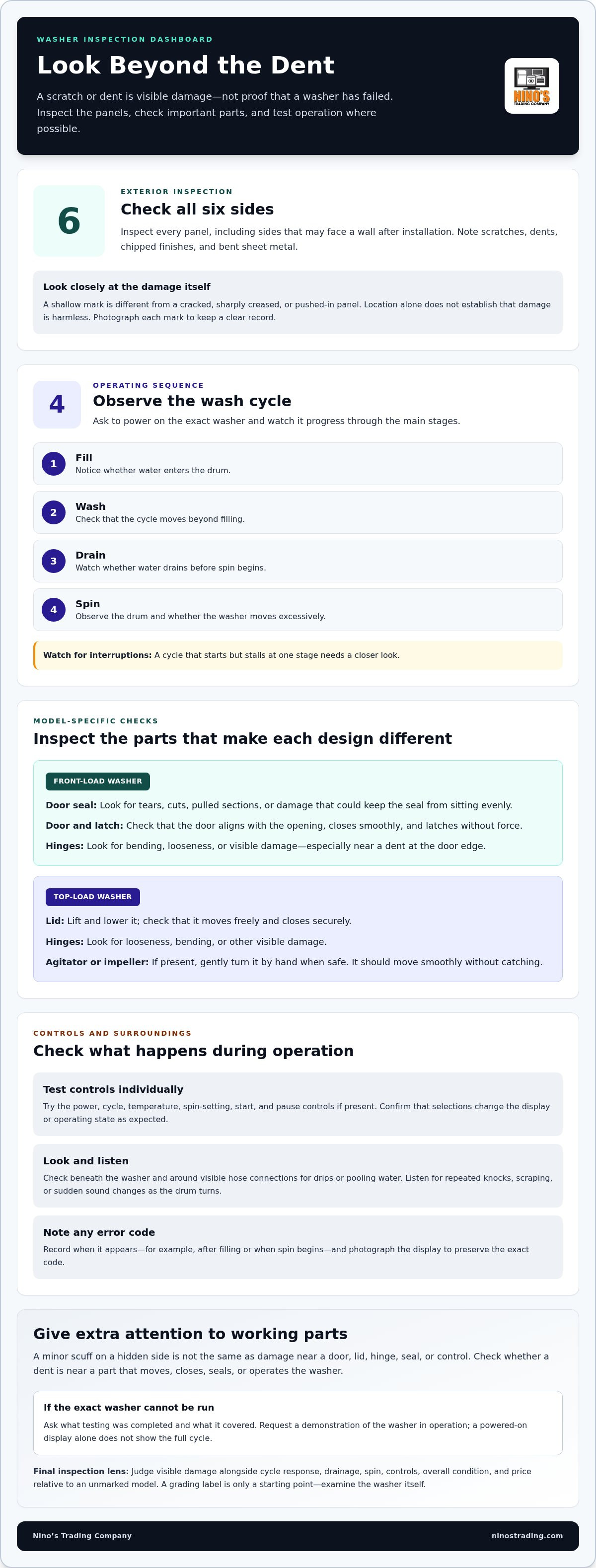
Before buying, inspect all six sides, including panels that may face a wall after installation. Look for scratches, dents, chipped finishes, and bent sheet metal. A mark on the back or side may be less visible once installed than one on the front. Its location alone doesn’t establish that it’s harmless, though. Check whether a dent is shallow or whether the panel is cracked, sharply creased, or pushed inward.
Pay extra attention to the door, handle, hinges, and control panel. A deep dent near the door can affect alignment, and a bent hinge may prevent it from closing properly. Check that the door opens and closes smoothly, sits evenly against the cabinet, and latches without force. On the control panel, look for cracked buttons, damaged display areas, or marks that could interfere with using a control. These areas matter more than a minor scuff on a hidden side.
Check the whole washer, not just its most visible mark. Open the door or lid and inspect the opening, seal, and accessible drum area for damage. Compare the left and right sides for uneven gaps. Run a hand near panel edges without pressing hard to notice sharp bends or loose trim. Photograph each mark before purchase to keep a clear record of the washer’s condition.
Washers may get cosmetic damage during shipping, warehouse handling, floor-model use, or when packaging is damaged or an item is returned open-box. Those causes don’t show whether the washer operates correctly. A scraped corner may come from movement, while a deep dent calls for a closer look at nearby parts. Ask what caused the visible damage and whether the machine has been function-tested.
Before buying a scratch-and-dent washer, inspect all six sides, then focus on the door or lid, hinges, seals, controls, and dents near working parts. Finally, test the washer’s functions where possible. Appearance alone can’t establish that it operates as expected.
2. Testing washer fill, drain, spin, and cycle functions
Learning how to inspect a scratch and dent washer means separating appearance from operation. Ask to power on the exact machine and check its display, buttons, and cycle selector. Choose a wash setting and confirm that it appears correctly. If the controls don’t respond consistently, a clean exterior or appealing discount won’t make up for the problem.
Watch what happens after starting a short cycle. The washer should begin filling, then move through washing, draining, and spinning. Notice whether water enters the drum and drains before the spin begins. A cycle that starts but stalls at one stage needs a closer look. If the store can’t run that unit, ask to see a current model operate so you can observe its controls and sounds.
Check around the washer while it fills and drains. Look beneath it and around visible hose connections for drips or pooling water. Listen for repeated knocks, scraping, or sudden changes in sound as the drum turns. During spin, watch whether the washer stays in place or moves excessively. These observations help you assess whether noise or movement interrupts normal operation.
Test controls individually rather than pressing several buttons at once. Try the power, cycle, temperature, spin-setting, start, and pause controls, if present. Confirm that each selection changes the display or operating state as expected. Note any error code and when it appears, such as after filling or when spin begins. Photograph the display to preserve the exact code for comparison with the washer’s paperwork.
To inspect a scratch-and-dent washer in a showroom, ask what testing has been completed and what the inspection covered. Request a demonstration of the washer in operation, not just a powered-on display. If possible, observe more than one cycle stage and listen for consistent sounds. Since control layouts vary by model, compare the selected setting with the machine’s display instead of assuming controls work alike.
Use what you observe to judge function independently from cosmetic flaws. A refrigerator requires different checks, while a washer’s value depends on its cycle response, drainage, spin, and controls. Compare the condition and test results with the specific model’s retail price; potential savings matter only alongside reliable operation. Record any concerns before deciding, especially if the test couldn’t include a full cycle.
3. Washer-specific checks for front-load and top-load models
Front-load and top-load washers have different parts to inspect, so tailor your checks to the design. On a front-loader, open the door and examine the rubber boot around the opening. Look for tears, cuts, pulled sections, or damage that could prevent the seal from sitting evenly. A damaged seal can let water escape during a wash.
Close the front-load door slowly and check that it lines up with the opening. The latch should engage without forcing the door, which should sit evenly against the seal. Inspect the hinges for bending, looseness, or visible damage. A dent near the hinge or door edge deserves closer attention than a small mark on a side panel because it may interfere with alignment or sealing.
For a top-loader, lift and lower the lid, then check that it moves freely and closes securely. Look at both hinges for looseness, bending, or damage. If the washer has an agitator or impeller, gently turn it by hand when safe to do so. It should move smoothly without catching against clothing or another obstruction. A dented lid or damaged hinge can affect closure even if the rest of the cabinet looks sound.
Inspect the control panel on either model type. Check the display, buttons, and surrounding trim for cracks or impact damage. Press the controls and make sure selections register. Damage near the panel may be cosmetic, but a sticking button or unresponsive display affects normal use. Also check door handles and nearby trim for loose pieces or sharp edges.
Warranty terms matter as much as the washer’s visible condition. Coverage for scratch-and-dent appliances can be full or partial. Before buying, establish whether the manufacturer’s original warranty applies, whether coverage has been reduced, and what repairs it covers. Read the warranty terms and distinguish covered functional repairs from cosmetic marks. A warranty does not necessarily cover removing a scratch or dent.
If you’re considering a washer-dryer combination, check the washer and drying functions separately. For a gas dryer, inspect the gas connections, igniter, and venting. For an electric dryer, check that its heating element produces consistent heat. Confirm that the drum rotates and the settings respond. A vent kit or stacking accessory may matter for your setup, so check which relevant parts are included.
These model-specific checks help distinguish cosmetic damage from problems affecting doors, seals, controls, or drying functions. Even a washer that passes its cycle test needs a sound seal and secure door or lid, so examine both before deciding.
4. Evaluating whether scratch and dent appliances offer good value
A scratch-and-dent washer is good value when its function, condition, and discount make sense together. Here, appliance prices typically run 40 to 60% below MSRP. Compare the washer with the same new model, not just a similar machine, and weigh the visible damage against the savings. A smaller discount may be less appealing if the dent affects a door, control, or other working part.
To find out whether a washer is new, open-box, or another condition, ask which category applies and review its sales documents. Nino’s inventory includes cancelled online orders, open-box items, closeouts, and new-in-box appliances, not used or refurbished machines. Open-box describes the packaging or sales condition, so inspect the washer itself rather than assuming the box tells the whole story.
Before judging value, inspect the washer’s exterior and accessible interior. Look for dents, scratches, and damaged trim, then check the drum, door opening, and detergent compartment. Make sure relevant parts and accessories are included, since replacing a missing hose or other component adds cost. Photograph each mark and note its location to keep a clear record of the condition.
Bring a tape measure, your room measurements, and a phone for photographs. A compact checklist can cover condition, function, included parts, warranty terms, and delivery path. Measure the appliance space, including its width, height, and depth; typical washing machines are about 27 inches wide, up to 44 inches high, and 28 to 34 inches deep. Compare those measurements with the specific model.
Measure the full route into the laundry area, not just the space beside the hookups. Check the doorway, hallway turns, stairs, and narrow passages between the entrance and installation spot. A washer that fits its final opening may still be difficult to move through a tight doorway. Allow room for hoses and for the door or lid to open.
Scratch-and-dent stores may display appliances marked during shipping, handling, or floor-model use, or with damaged packaging. Ask whether the specific washer has been tested and what the inspection covered. Review warranty terms, return deadlines, exchange options, any restocking fees, and delivery or haul-away arrangements before purchase. Sales may be final, so compare the washer’s documented condition and included parts with the terms of sale.
Use the same approach for dryers or refrigerators, tailoring the function checks to each appliance. For a washer, consider its test results, damage location, included components, fit, and coverage. A low price alone doesn’t establish value if the machine won’t fit or the terms don’t suit your needs.
5. Meaning and causes of scratch-and-dent damage
A scratch or dent records contact or handling, but its appearance alone doesn’t explain what happened inside the washer. Shipping bumps, warehouse handling, floor-model wear, open-box returns, and damaged packaging can all leave visible marks. When buying, separate the likely cause from the washer’s current condition: a shipping scuff may be superficial, while a deep impact needs closer inspection. The source of a mark is useful context, not proof that the machine works.
Start with the panel itself. A shallow dent usually leaves the surface continuous, while a sharp crease, crack, or bent edge suggests a more serious impact. Look along the panel in good light, then compare it with the surrounding metal for uneven gaps or distortion. Check nearby seams and trim, too. If the panel has shifted toward the drum, door, or controls, the damage may affect more than appearance.
Next, trace the damage toward nearby working parts. A dent beside a door opening calls for checking alignment and closure; a mark near a control area calls for testing the affected buttons and display. A side-panel scuff away from the washer opening is different from a crushed corner that has pushed the cabinet out of shape. Complete the operating checks before treating any mark as cosmetic.
Assess the discount against the visible damage and the washer’s demonstrated condition. Compare the same model, or a closely matched model with similar features, rather than relying on the price of a different machine. Consider where the mark will sit in your laundry area, whether it will remain visible, and whether it affects a panel or part you use. A discount has less practical value if damage interferes with operation or the washer won’t fit your space.
Keep a specific record of the damage. Note each mark’s location, describe its size in plain terms such as “small shallow dent,” and record its proximity to a door, seam, or control. Take clear photographs straight on and at an angle to show creases or panel bends. If a scratch-and-dent tag describes the inventory broadly, compare its wording with the actual washer instead of assuming every unit is in the same condition.
For a final decision, match three things: the panel’s condition, the washer’s test results, and the discount compared with a similar model. A functioning machine with a hidden, shallow mark may suit a laundry space better than one with a prominent dent near its door. Explore scratch-and-dent appliances as you compare visible condition with practical value.
Nino's Trading Company: Refrigerators
Nino's Trading Company sells washers and dryers, refrigerators, ranges, and TVs. Its inventory includes cancelled online orders, open-box appliances, closeouts, and new-in-box items, not used or refurbished machines.
Appliances come with a full 1 year parts and labor warranty, with extended parts and labor warranties available up to 5 years. These coverage details can help you consider your next appliance purchase alongside the condition and function checks covered in this guide.
Contact Nino's Trading Company to discuss its appliance offerings.
Make your next appliance choice with confidence
Knowing how to inspect a scratch-and-dent washer gives you a practical way to judge its condition before choosing a machine. Use the same approach for your next appliance: focus on what you need at home, compare options that fit, and weigh function as well as appearance. Consider a mark in context rather than treating it as the whole story.
Nino's Trading Company sells washers and dryers, refrigerators, and TVs, so you can consider more than one household need during a shopping trip. Whether you’re replacing laundry equipment or planning another appliance purchase, compare options based on what fits your needs.
Contact Nino's Trading Company to explore appliance options and take the next step at your pace. With a practical checklist and a clear sense of what matters in your home, you’re well prepared to make a choice that feels right.
Frequently Asked Questions
What Are Scratch and Dent Appliances?
Scratch-and-dent appliances have visible cosmetic marks, often from shipping, handling, or packaging damage. The label describes appearance, not a condition shared by every machine. Two washers may both be called scratch-and-dent but have marks in different places and of different severity. Judge each appliance by its own condition and operation rather than assuming the category tells you whether it’s suitable.
Do they come with warranties?
Warranty coverage depends on the appliance and the terms attached to its sale. Read the written warranty to identify who provides coverage, how long it lasts, and which functional repairs are included. Check whether cosmetic marks are excluded, since coverage for mechanical issues doesn’t necessarily pay to remove visible damage. Keep the warranty paperwork with your receipt so you can refer to the exact terms after purchase.
How do I check a washer drum, door seal, hoses, and controls for damage?
Use a flashlight to inspect the drum’s visible surface for rough spots, loose parts, or damage that could snag fabric. On a front-loader, look for tears or folds in the seal; check hoses for cracks, kinks, or loose connections. Press each control and watch for a response on the display. A phone photo can help record a mark or concern beside the part it affects.
How can I test a scratch and dent washer's wash and spin cycles in a store?
Ask for a demonstration and watch the washer move through its cycle stages. Confirm that selected settings appear on the display, water enters, and the machine advances toward draining and spinning. During spin, listen for repeated knocking and watch for unusual movement. If a complete cycle isn’t practical, ask to see a current model operate and observe its normal controls and sounds.
What hidden damage can dents or shipping damage cause in a washing machine?
A dent can distort a panel or shift nearby parts, especially beside the door opening, hinge, or controls. That may interfere with door alignment, sealing, or a control’s response. Look for uneven gaps, bent edges, or trim that no longer sits flush around the impact. A visible mark doesn’t prove hidden damage, so consider its location alongside the washer’s operating test.
What delivery and installation checks should I make for a scratch and dent washer?
Measure the washer space and the full route to it, including doorway width, hallway turns, and stairs. Leave room for hoses and for the lid or door to open. Before buying, clarify delivery and haul-away arrangements, and check which hoses or other needed parts are included. Shoppers in Little Rock, Fort Smith, Tulsa, Oklahoma City, Fayetteville, Springdale, Rogers, Bentonville, Broken Arrow, Yukon, Mustang, and Edmond can use the same fit checklist.


