
In the Oklahoma City area, directories identify four stores whose websites advertise outlet or open-box appliances and three that advertise scratch-and-dent stock. Oklahoma appliance outlet reviews can add context, but the type of inventory matters just as much as the rating: an open-box appliance, a dent-and-ding item and a pre-owned appliance aren’t the same thing.
It makes sense to look for a lower price without giving up a clear picture of what you’re buying. This guide explains what dent-and-ding discounts generally reflect, how outlet and open-box options differ, and what to keep in mind when looking at pre-owned appliances in Oklahoma. It also covers how to read customer reviews with the product condition and warranty in mind, so you can better understand which options fit your household. You’ll get a practical overview of the choices available and how Nino’s Trading Company’s new-in-box, open-box, closeout and cancelled-online-order appliances fit into them.
Key Takeaways
- Learn what a dent-and-ding discount can mean and why the condition of an appliance matters alongside its price.
- Understand how outlet and open-box options differ from pre-owned appliances before deciding which category suits your needs.
- See what to weigh when comparing appliance prices, including the product’s condition and the details behind the offer.
- Get a clearer picture of how delivery, installation, haul-away, and financing can affect the overall purchase.
- Explore how cancelled online orders, open-box, closeout, and new-in-box appliances provide alternatives to used or refurbished options.
New dent-and-ding appliance discounts
A scratch-and-dent discount reflects an item’s condition, not a standard markdown. A shallow dent on the side may matter less than damage near a door seal, control panel, or hinge. Consider where the appliance will sit and how the mark affects everyday use. A refrigerator dent on an exposed side may remain visible, while the same mark could be hidden beside cabinetry. A washer scratch on the front is easy to see; one on a concealed panel may matter less.
Three Oklahoma City-area stores have websites describing scratch-and-dent stock. That count identifies advertised inventory, not a promise that a particular model is available. Stock can differ by appliance type and condition. A marked range, for example, may have a different cosmetic issue from a scratched refrigerator. The discount alone doesn’t describe the damage. Review the appliance’s condition, included components, and written sale terms together. Those details help show whether the savings fit the specific item.
Use a simple inspection sequence before choosing a discounted appliance:
- Locate each dent, scratch, or finish mark.
- Check doors, drawers, knobs, and visible controls.
- Compare the item’s condition with its listed description.
- Read the purchase terms for returns, exchanges, and warranty coverage.
For example, a small mark on a refrigerator’s side may suit a buyer placing it beside a cabinet. A dent near the door deserves closer attention because the door’s fit matters in everyday use. Cosmetic damage and functional concerns are separate questions. Check that the condition description makes the distinction clear; a lower price alone can’t tell you whether a mark affects operation.
For any appliance purchase, read the item’s written return, exchange, and warranty terms rather than relying on a scratch-and-dent label. Keep the receipt and condition details with your purchase records.
Reviews are most useful when multiple customers describe the same specific issue. For an Oklahoma appliance outlet, look for recurring details about order handling, delivery, or warranty follow-through rather than treating one comment as proof of a general pattern. Keep reports about different issues separate.
For an order, repair, or warranty question, use the contact details on the order documents or receipt. Include the order information, appliance model, and a clear description of the issue to give your request useful context.
Compare a marked appliance with an unmarked alternative by considering visibility, condition, and written coverage. A scratch on a hidden panel may be an acceptable tradeoff, while damage around a door or control deserves closer attention. A worthwhile discount is one that makes sense for the exact appliance and its documented condition.
Additionally, the directory identifies 3 Oklahoma City-area stores whose websites say they sell scratch-and-dent stock. Treat that as a starting point for comparison, not confirmation that a suitable appliance is on hand. Check a store’s current inventory and ask about the condition and sale terms for the exact item before relying on a listing. Verify before traveling or comparing offers.
Outlet and open-box store availability
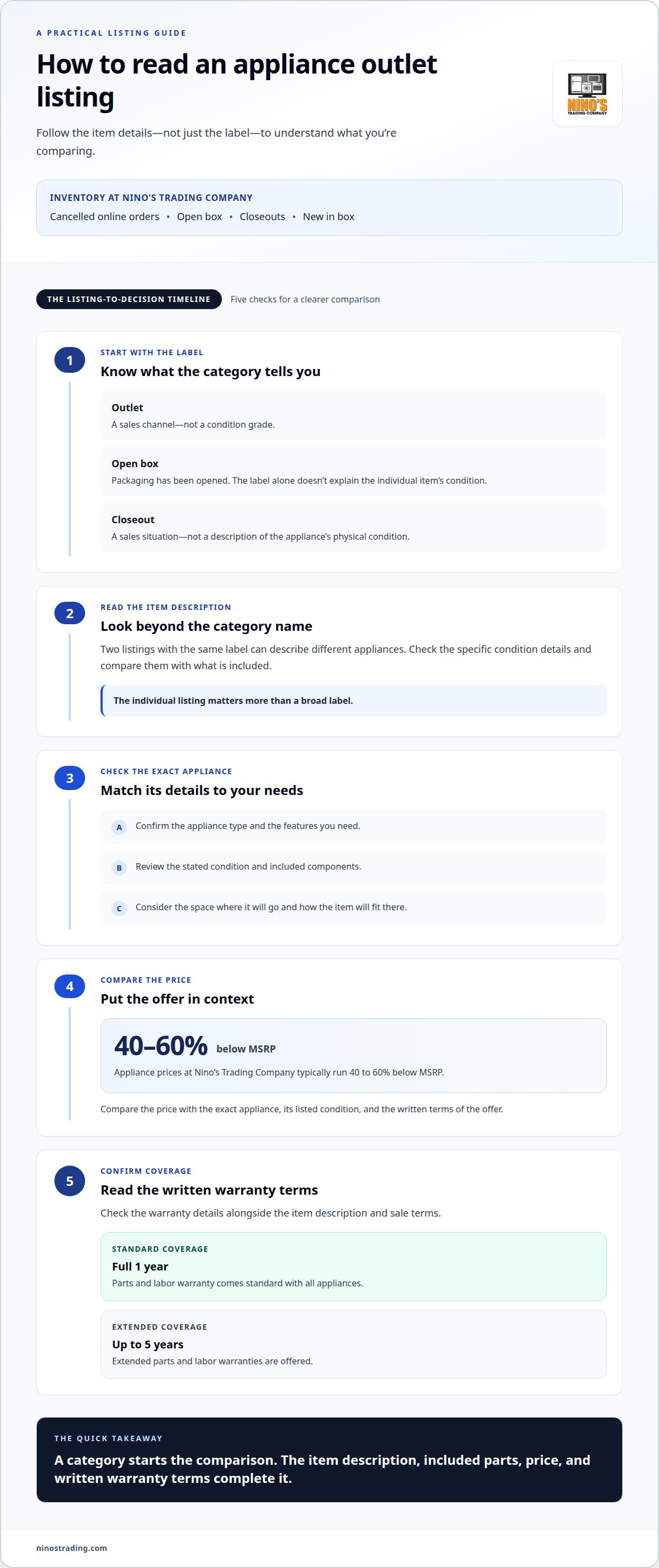
In the Oklahoma City area, four stores advertise outlet or open-box stock on their websites. Three advertise scratch-and-dent appliances. These categories can overlap, but they describe different reasons an appliance may be discounted. An outlet label identifies a sales channel, while open-box describes packaging or sales history. Scratch-and-dent points to visible cosmetic damage. The label alone doesn’t explain an individual item’s condition.
Open-box inventory can include an appliance with opened packaging. That label alone doesn’t tell you whether it was installed or used. Check the item description and written condition details. One refrigerator may have opened packaging but no visible marks, while another may have a specific scuff. The individual item matters more than the category name.
Outlet stock can also include closeouts or appliances sold through a discount channel. Closeout describes a sales situation, not necessarily the appliance’s physical condition. One range might be new in its box, while another outlet item may have opened packaging. Treat each listing as a separate offer and compare its condition, included parts, and sale terms.
Use these distinctions to organize your search:
- Open-box: Check what the listing says about packaging and item condition.
- Scratch-and-dent: Note where the mark appears and whether it affects appearance or use.
- Closeout: Read the description to learn the product’s condition and sale terms.
- Outlet: Treat this as a store category, not a condition grade.
Individual appliances sell, so an advertised category doesn’t guarantee that a particular model is available. Selection may also differ between washers and refrigerators. Start by searching for the appliance type you need, then narrow your options by condition and features. This keeps a broad outlet label from doing too much work.
Reviews can describe shoppers’ experiences with a store, but they don’t replace an item description. In Oklahoma appliance outlet reviews, separate comments about selection from those about a product’s specific condition. A review of an open-box range may not apply to the refrigerator you’re considering. Look for details relevant to your decision, such as the product category and stage of purchase.
Before settling on an item, compare its stated condition with the space where it will go. A side-panel mark may be less noticeable beside cabinetry; a front-panel mark may remain in view. Then read the sale terms and warranty information together. For shoppers comparing appliance outlet options, these distinctions help make open-box and outlet labels more useful without assuming every item is alike.
The directory identifies 4 Oklahoma City-area stores whose websites say they sell outlet or open-box stock. That count describes the stores identified, not the number of units, categories, or models available at any moment. For a specific purchase, check the store’s current listing and the individual item’s written condition details before relying on a category label.
Pre-owned appliances
Pre-owned appliances have had a previous owner or household use. That differs from open-box, which describes packaging or sales history and doesn’t necessarily mean prior use. A used refrigerator may show everyday wear. An open-box refrigerator may have opened packaging, but that label alone doesn’t establish its use history. Consider both the category and the individual item’s condition.
Oklahoma City-area directory counts list 27 used appliance stores, while another count lists 2 used-appliance stores. Those figures use different counts, so they don’t establish the number of places carrying a particular model. A directory listing also doesn’t tell you whether a store has a washer, range, or refrigerator available today. Treat the counts as a broad indication of listings, not a live inventory report.
For a pre-owned appliance, focus on its history and condition. A washer’s drum, door, and controls may show signs of use. A refrigerator’s shelves, drawers, seals, and finish can reveal wear. Read the product description for its condition and the written coverage that applies. Keep those details with your purchase record in case you need support later.
Use this practical checklist to assess a used appliance:
- Read the item description and note any stated wear.
- Look over visible surfaces, doors, drawers, and controls.
- Review the written warranty and return terms.
- Confirm which components are included with the appliance.
- Match the appliance’s dimensions to its intended space.
Reviews add context, but one review won’t describe every used appliance. A customer describing a noisy dryer may not be discussing the same model or condition you’re considering. Give more weight to comments that identify a specific issue and explain the purchase context. Separate feedback about store service from information about the appliance itself.
Also distinguish “used” from “refurbished.” Used describes prior use; refurbished generally signals that work was performed before resale. Neither label explains the specific repairs, condition, or coverage. Look for item-specific descriptions and written terms instead of assuming every product in a category has the same history.
When comparing a pre-owned appliance with open-box or new-in-box stock, weigh the condition and written coverage side by side. A used washer may suit a buyer comfortable with prior use, while someone seeking an appliance without a previous owner may prefer another category. Start with what each label means, what the item description says, and which purchase terms apply.
Oklahoma Appliance Outlet Price Comparison
A useful price comparison starts with the same appliance, not products that merely look similar. Compare the exact model number, finish, size, and included components. A refrigerator with a water dispenser may differ from a similar model without one, making a direct price comparison less reliable. The model number on the listing or product label gives you a firmer basis.
Next, separate condition from price. New-in-box, open-box, and visibly damaged appliances are different buying options. Compare items in the same condition category where possible. For example, don’t judge an open-box range against a new-in-box model without accounting for the difference. Use the listing’s condition description, since the category label alone may leave out important details.
MSRP, or manufacturer’s suggested retail price, can provide a reference point, but it isn’t the same as the amount another store currently asks. Compare the current listed price for the same model, then consider its condition and written coverage. If a listing makes a discount claim, identify the reference price and product before drawing conclusions.
Use a consistent checklist for each listing:
- Model: Match the model number and major features.
- Condition: Compare new, open-box, and damaged items separately.
- Included items: Note accessories or parts listed with the appliance.
- Coverage: Read the warranty terms alongside the price.
- Purchase terms: Include any stated charges that affect the final amount.
Consider a shopper comparing two similar washers. One listing may cost less but have opened packaging, while another is new in its box. The lower price doesn’t automatically mean better value. Compare the written condition, warranty, and included components before deciding. The same approach works for refrigerators, dryers, and ranges.
Store reviews can describe buyers’ experiences with pricing, but they rarely establish the current price of a particular model. In Oklahoma appliance outlet reviews, distinguish comments about a past promotion from details about a specific item. A review may refer to a different condition or purchase date. Use it as context, then compare current listings by matching model details.
Finally, compare the total purchase terms, not just the headline figure. A listed price and the final amount can differ when additional charges apply. Record the model, condition, stated price, and applicable terms for each option. That simple side-by-side method helps clarify whether an outlet offer compares fairly with another Oklahoma store, without treating different appliances as equivalent.
Does Oklahoma Appliance Outlet offer delivery, installation, haul-away, or financing, and what do these services cost?
A product listing alone doesn’t establish whether delivery, installation, haul-away, or financing is included. These are separate purchase details, and service terms can vary. Don’t assume that delivery includes installation or removal of an old appliance. When buying a refrigerator, for example, moving it inside and connecting it are distinct tasks.
Delivery charges can depend on the order and delivery conditions. The destination, access to the home, and requested placement may affect the arrangement. A ground-floor entrance differs from stairs or a narrow hallway. Before comparing appliance offers, note whether the stated amount includes delivery and where the service ends. This makes the item price and delivery terms easier to assess together.
Installation depends on the appliance and the work involved. Replacing a washer in an existing laundry space differs from changing connections or preparing a new location. Installing a range may involve different needs from placing a refrigerator. Read the service description to understand what installation covers, and distinguish setup from extra work. Buying an appliance doesn’t automatically include either.
Haul-away is a separate service for removing an existing appliance, not simply bringing in a replacement. Someone replacing a dryer, for instance, may need to arrange removal separately from delivery. Review the order terms for what items qualify and whether separate conditions apply. These details affect convenience and the total purchase.
Financing terms also deserve a separate review. Financing is not the same as a discount on the appliance. Read the written terms for payment timing, fees, and eligibility before deciding. Don’t compare monthly payments alone; consider the full amount and conditions stated in the offer. A product price or review comment doesn’t establish that financing has no cost.
Use this short comparison checklist for each retailer:
- Delivery: Identify the destination and placement covered.
- Installation: Note the appliance and work included.
- Haul-away: Confirm removal terms for the old appliance.
- Financing: Read the full payment terms and any stated fees.
Customer reviews can add context about delivery or installation, but a past buyer’s charges may not apply to another order. Treat reviews as examples, then compare the current written terms for your appliance and address. This helps distinguish a low item price from additional services that change the final purchase.
To consider appliance options alongside these purchase details, explore available appliances and compare the terms that apply to your order.
Nino's Trading Company: Cancelled Online Appliance orders
Nino’s Trading Company sells refrigerators, washers and dryers, ranges, stoves, and TVs in Arkansas and Oklahoma. Its selection includes closeouts, open-box, cancelled online orders, and new-in-box appliances, giving shoppers several options. The company’s listed appliances include new-in-box products.
Every appliance comes with a full 1 year parts and labor warranty. Extended parts and labor warranties are also available for up to 5 years. These coverage options give shoppers a clear way to consider warranty length alongside an appliance’s purchase terms.
Explore Nino’s Trading Company’s appliance selection to find an option that fits your needs.
Choose the Appliance That Fits Your Next Step
Start by considering your space, the appliance type, and the condition you’re comfortable buying. Oklahoma appliance outlet reviews can provide context, but your household’s needs should guide your decision. A refrigerator for a kitchen remodel may call for different priorities from a washer and dryer replacing a worn-out pair. If you’re also considering a TV, assess that purchase separately from your appliance checklist.
Nino’s Trading Company offers refrigerators, washers and dryers, and TVs in Arkansas and Oklahoma. Shoppers in Little Rock, Fort Smith, Tulsa, Oklahoma City, Fayetteville, Springdale, Rogers, Bentonville, Broken Arrow, Yukon, Mustang, and Edmond can explore the available options. Identify what matters most for your home, then compare product details and purchase terms to find a suitable match.
For help with your next appliance purchase, contact Nino's Trading Company. A practical next step can make choosing feel more straightforward.
Frequently Asked Questions
What are Oklahoma Appliance Outlet's ratings and number of reviews across review sites?
The Oklahoma City listing for Nino's Trading - Discount Appliances & TVs, OKC Warehouse shows a 4.8-star Google rating and 604 Google reviews. These figures refer to that specific listing, not every store or review platform. If you’re comparing ratings, match the exact store name and location first; reviews for another branch or business may describe a different customer experience.
What are Oklahoma Appliance Outlet's return, exchange, and warranty policies?
Oklahoma Appliance Outlet’s return, exchange, and warranty terms are governed by the sale documents for the item. Review those written terms before purchase and keep the receipt with the appliance’s condition details.


