

The best kitchen stove for your home isn’t necessarily the one with the most features. It’s the one that fits your space and the way you cook. A model that looks right in a showroom can be awkward if its dimensions, layout, or controls don’t suit your kitchen.
Measurements can be confusing, and it isn’t always clear which features will make everyday cooking easier. Start with the basics: how much room you have, what you cook most often, and which stove format and features match your routine.
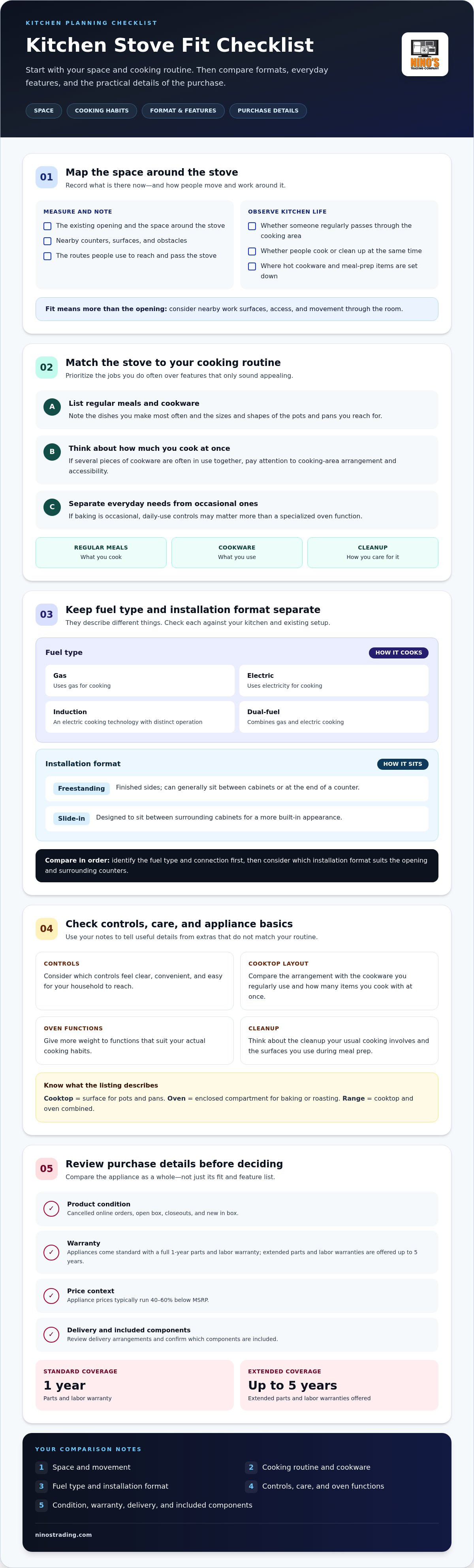
This practical checklist will help you assess those points before you buy. You’ll review kitchen space, compare common stove formats and features, and note the details to sort out before bringing a new appliance home. You’ll also learn how to weigh product condition categories alongside fit and use, so you can compare options with confidence.
Key Takeaways
- Measure the existing opening, surrounding surfaces, and nearby obstacles, then compare your notes with the exact appliance specifications.
- Consider fuel type and installation format separately, then choose a kitchen stove with features that suit your cooking routine.
- Compare controls, oven functions, cooktop layout, and cleanup needs based on what matters in your day-to-day use.
- Weigh product condition alongside fit and features for a clearer comparison.
- Before buying, review warranty terms, delivery arrangements, and included components.
Kitchen Stove Checklist: Start With Your Space and Cooking Routine
A stove needs to fit both your kitchen and the way you cook. A model may have appealing features but still feel inconvenient if it crowds the work area, has controls that are awkward to reach, or includes cooking functions that don’t match the meals you make. Start with your kitchen and routine rather than a list of popular features.
This checklist helps you assess what matters, not rank stove brands. Start with your room layout and cooking habits, then consider controls, care, and practical purchase details. A kitchen stove overview can provide helpful background on stove types and components, but your household’s routine is the better guide to which details deserve attention.
- Space: Note the stove’s current location and the room around it.
- Cooking habits: List the meals and cookware you use regularly.
- Controls: Consider which controls feel clear and convenient.
- Care: Think about the cleanup your usual cooking involves.
- Purchase details: Keep product condition, warranty, delivery, and included components in view.
List the cooking jobs your stove needs to handle
Think about a typical week. What do you prepare most often? Do you regularly use several pieces of cookware at once, or is your routine usually centered on one pan and a pot? Note the cookware you reach for, since its size and shape can affect how useful a cooktop layout feels. Also consider how often people in your household cook, without assuming everyone follows the same schedule.
Separate everyday jobs from occasional ones. If you bake only now and then, a specialized oven function may matter less than controls you’ll use daily. If you often prepare several parts of a meal at once, pay closer attention to the arrangement and accessibility of the cooking areas. Stove fit depends on how you use it as well as how much space it occupies.
Notice how the stove fits into kitchen life
Consider who cooks and how people share the kitchen while food is being prepared. Does someone pass through the area often? Do multiple people cook or help with cleanup at the same time? Observe these patterns during a normal meal instead of picturing an idealized routine. Your observations can show whether access to the stove, nearby work surfaces, and movement through the room feel comfortable.
Include cleanup in your notes. Think about where hot cookware is usually set down, which surfaces you use during meal prep, and how you clear the area afterward. These details turn general preferences into useful buying priorities. Keep your list nearby as you compare options to distinguish features that solve a real need from extras that simply look appealing.
Understand Kitchen Stove Formats Before Comparing Features
Before comparing controls or cooking functions, sort out the basic terms used to describe stoves. A range combines a cooktop and an oven in one appliance. Product descriptions may use “range” and “stove” for closely related appliances, so focus on what the unit includes and how it fits your kitchen rather than relying on the label alone.
Separate fuel type from installation format
Fuel type describes how the appliance cooks; installation format describes how it sits in the kitchen. These are separate choices, not competing names for the same feature. Gas, electric, induction, and dual-fuel ranges are broad fuel categories. Freestanding and slide-in describe installation formats. A freestanding model has finished sides and can generally sit between cabinets or at the end of a counter. A slide-in model is designed to sit between surrounding cabinets for a more built-in appearance.
Keep those categories distinct as you compare. First identify the fuel type that matches your kitchen’s existing connection, then compare which installation format suits the opening and surrounding counters. Don’t assume that a slide-in design tells you whether the appliance is gas or electric. For a focused explanation of two cooking technologies, see this induction range versus electric range guide.
- Gas: A fuel category that uses gas for cooking.
- Electric: A category that uses electricity for cooking.
- Induction: An electric cooking technology with its own distinct operation.
- Dual-fuel: A range category that combines gas and electric cooking.
- Freestanding: An installation format with finished sides.
- Slide-in: An installation format designed to fit between cabinets.
Check which terms match the stove you already have
Before comparing replacements, write down what you have now: whether it’s a range or a separate cooktop and oven, its fuel type, and the connection it uses. If you’re unsure, check the appliance’s labels or documentation rather than guessing. This gives you a starting point for identifying options that may fit your current setup and those that involve a different format or fuel type.
A cooktop is the surface for cooking in pots and pans; an oven is the enclosed compartment for baking or roasting; a range combines both. This distinction matters because product listings may use “stove” and “range” in overlapping ways, while a cooktop alone does not include an oven. Keep the terms and your existing setup in your notes. That makes comparisons clearer and helps you focus on specifications for the whole appliance, not just one component.
Kitchen Stove Fit Checklist: Measure the Opening and Review the Layout
Measurements turn “this looks about right” into a useful comparison. Before browsing, record the space around your current stove and the routes people use to reach it. A kitchen stove must fit the available opening, but surrounding counters, cabinets, doors, and walkways also affect how practical it is to use.
Measure the space before browsing stove options
Use a tape measure and write down the results instead of relying on memory. Measure both the current appliance and the available opening, since the appliance’s outer dimensions and the surrounding space aren’t necessarily the same. Then check nearby surfaces and obstacles.
- Existing appliance and opening: Record the appliance’s width, height, and depth, then measure the opening where it sits.
- Surrounding surfaces: Note the position of counters and cabinets beside or above the stove, including edges or overhangs that affect the space.
- Nearby obstacles: Check doors, handles, walkways, and other features that could affect access or movement around the appliance.
Use this simple record to compare your kitchen with a specific model:
| What to measure | Your recorded value | Model specification |
|---|---|---|
| Current appliance width, height, and depth | __________ | __________ |
| Available opening width, height, and depth | __________ | __________ |
| Nearby counters, cabinets, or obstacles | __________ | __________ |
There isn’t one set of measurements or clearances that fits every kitchen and appliance. Compare your notes with the exact model’s published dimensions and instructions. If a specification is unclear, don’t substitute a general rule of thumb. Use the information provided for that appliance.
Check kitchen layout and daily access
Numbers are only part of the fit. Picture opening the oven and stove doors in your usual cooking area. Is there room to stand comfortably, reach the appliance, and move past it without interrupting someone else’s task? Notice whether an open door would block a busy pathway or make it harder to reach a nearby work surface.
Map the routine around the stove, too. Where do you set down cookware, prepare ingredients, and handle cleanup? A layout that makes these steps awkward may be frustrating even if the appliance fits its opening. For a broader shopping overview, see this stoves for sale in Fayetteville buying guide.
Once you have your measurements and layout notes, use them to narrow your options. You can also browse stove options as part of your comparison, keeping the model’s exact specifications beside your recorded values.
Kitchen Stove Checklist: Match Controls and Features to Everyday Use
Once you know what fits your kitchen, compare each appliance’s features with the tasks you need it to handle. A control or oven setting is useful when it supports a regular task, but it may be an occasional-use extra if it rarely matches your meals. There isn’t one feature list that suits every home.
Prioritize features based on cooking habits
Think about the meals you make most often. Do you bake regularly, prepare several dishes at once, or usually make simpler meals? Consider which cooking areas you tend to use and whether you rely on particular oven functions. These patterns help separate practical priorities from features that sound appealing but may see little use.
Write two short lists before comparing models: must-have and nice-to-have. Keep the first list limited to features that support your regular routine. Use the second for options you’d enjoy but don’t need for typical meals. This makes it easier to compare a kitchen stove without treating every available feature as essential.
| Feature to consider | Everyday use | Reader priority |
|---|---|---|
| Controls | Set and adjust cooking functions | Are they clear and comfortable to reach? |
| Oven functions | Support the baking or cooking tasks you do | Which settings would you use regularly? |
| Cooktop layout | Accommodate your usual pots and pans | Does the arrangement suit your cookware? |
| Surface and cleanup | Shape your routine after cooking | Does the care guidance fit your habits? |
Review controls, upkeep, and product condition
Check whether the controls make sense to you and are easy to reach in your kitchen. Think about the way you cook: would you prefer a straightforward arrangement, or do you expect to use several settings? For care, review the manufacturer’s guidance for the cooking surface and other areas you’ll clean. Consider whether those instructions suit the time and routine you’re comfortable with.
Product condition is another part of the comparison. New-in-box describes an appliance supplied in its box; open-box indicates that the box has been opened. Closeout describes inventory sold as a closeout, and scratch-and-dent identifies an appliance with a scratch or dent. Nino’s also offers canceled online orders. These are product categories, not used or refurbished appliances. Read the specific item description and weigh its condition alongside fit, features, and your must-have list.
Nino’s Trading Company sells kitchen stoves and ranges, including new-in-box, open-box, closeout, canceled online order, and scratch-and-dent appliances. Browse stove and range options and compare their details with your routine and priorities.
Before Buying a Kitchen Stove: Review Delivery, Warranty, and Local Options
You’ve narrowed your options by fit and everyday use. Before choosing a kitchen stove, review the details that affect what arrives at your home and what coverage comes with it. Checking product condition, warranty, delivery arrangements, and included components can help prevent surprises after you’ve made your choice.
Review warranty and product-condition information
All Nino’s appliances come with a full one-year parts-and-labor warranty. Extended parts-and-labor warranties are also offered for up to five years. Read the warranty terms for the stove you’re considering so you understand the coverage period and what it applies to. Include this information in your comparison alongside the model’s specifications and your fit notes.
Product condition is another useful point of comparison. Nino’s inventory includes new-in-box, open-box, canceled online order, closeout, and scratch-and-dent appliances. These labels describe different product categories, so read the specific item description and consider how its condition fits your priorities. The appliances are not used or refurbished. Don’t assume all categories mean the same thing, or that a label alone tells you every detail about an item.
Appliance prices typically run 40 to 60% below MSRP, though that range isn’t a promise of a particular price or discount on every stove. Compare the specific appliance’s price and condition with its features, fit, and warranty information to weigh its overall value.
Confirm the practical details before purchase
Review the delivery arrangements before buying. Consider the route into your home, including doorways, steps, turns, and the path to the kitchen. Read the stated delivery terms and plan around the appliance’s destination so access and placement are clear. Don’t assume delivery includes particular services or handling unless those details are stated.
Check what components come with the appliance, too. Compare the product information with what you expect to receive, and note any included parts or accessories that matter for your setup. Keep the exact model details with your measurements so you can refer to the same information when making a final decision.
- Condition: Note the category and review the specific item description.
- Warranty: Understand the coverage period and what parts and labor are covered.
- Delivery: Review the arrangements and consider the route to the kitchen.
- Included components: Record what comes with the appliance.
Nino’s Trading Company serves appliance shoppers in Little Rock, Fort Smith, Tulsa, Oklahoma City, Fayetteville, Springdale, Rogers, Bentonville, Broken Arrow, Yukon, Mustang, and Edmond. Use your measurements and priorities to compare Nino’s stove and range options for your kitchen.
Take Your Kitchen Stove Shortlist to the Next Step
Before settling on a model, turn your notes into a simple decision guide. Choose the two or three qualities that matter most for your household, then compare each option against those priorities. If two stoves both look suitable, consider which is a better match for your daily routine and which trade-offs you’re comfortable making.
Keep your measurements and must-have list nearby as you browse. That makes it easier to focus on stoves that suit your kitchen instead of getting distracted by features you may rarely use. A thoughtful comparison doesn’t have to be complicated; it just needs to reflect how you cook and live in the space.
Ready to put your checklist to work? Explore kitchen stoves and ranges at Nino’s Trading Company and compare the available options. With your priorities clear, you can choose a stove that feels right for your home.
Frequently Asked Questions
Can you use cast iron on a glass-top kitchen stove?
Yes, cast iron can be used on many glass-top stoves, but handle it carefully to help protect the surface. Lift the pan instead of sliding it, and avoid dropping it onto the cooktop. Check the stove manual for cookware guidance, since recommendations can vary by model. Before cooking, make sure the pan sits flat and is clean underneath so debris doesn’t get dragged across the glass.
How do you clean a kitchen stove without scratching it?
Let the surface cool, then follow the care instructions for your stove’s specific finish. A soft cloth and a cleaner approved for that surface are a sensible starting point. Avoid scouring pads, abrasive powders, or scraping tools unless the manufacturer’s instructions allow them. For stuck-on food, use the method recommended in the manual rather than applying more force, which can scratch or damage some finishes.
Can a gas kitchen stove work during a power outage?
It depends on the model. Some gas cooktops may allow manual burner lighting, while others rely on electric ignition; the oven may also need electricity to operate. Check the appliance manual for outage instructions before attempting to light a burner. Don’t improvise with a match or lighter, and never use the stove if you smell gas. Follow the manufacturer’s safety guidance for your specific appliance.
Why might an electric stove heat unevenly?
Uneven heating can come from cookware that doesn’t sit flat, a pan that doesn’t match the cooking area, or food distributed unevenly inside the oven. For a stovetop, check that the pan’s base is clean and level. For oven results, try positioning the dish as directed in the manual and allow the oven to preheat. If the problem continues across different cookware and meals, consult the appliance’s troubleshooting instructions.
Can you replace a kitchen stove without replacing the countertops?
Often, yes. Replacing a stove doesn’t automatically require new countertops, but the replacement needs to suit the existing opening and surrounding surfaces. Compare the new model’s exact dimensions and installation instructions with your current setup, including how the cooktop meets the counter. Pay close attention when changing between freestanding and slide-in formats, since their designs can meet adjacent surfaces differently.
How can you tell if a kitchen stove is level?
With the appliance off and cool, place a spirit level on a flat surface of the stove and check it from side to side, then front to back. Consult the manual for the correct place to position the level and how to adjust the appliance’s leveling feet. Don’t force the stove or adjust it while it’s connected if doing so could strain its connections. Recheck the level after any adjustment.


