

Induction is electric cooking, but it doesn’t heat the same way a conventional electric range does. That difference makes the induction range vs electric range decision less about labels and more about how you cook, what cookware you own, and what your kitchen can support.
If range listings have left you wondering whether induction is simply another name for a smooth glass cooktop, you’re not alone. Both types use electricity, but one heats the cookware directly while the other heats the cooking surface first. That affects how quickly pans respond, how the cooktop feels to use, and what cleanup is like after a meal.
This guide explains how induction and radiant electric ranges work, then compares their everyday benefits and trade-offs, including cookware compatibility, cleaning, safety, and installation considerations. You’ll also learn what to check before shopping so you can narrow down the right fit for your kitchen. Nino’s Trading Company sells ranges and stoves, including new-in-box, open-box, closeout, and cancelled-online-order appliances.
Key Takeaways
- When comparing induction range vs electric range options, weigh cooking responsiveness, surface heat, cleanup, and the cues you prefer while cooking.
- Check whether your current pans are induction-compatible before deciding; cookware compatibility is a key difference in everyday use.
- Match the range’s controls and cooking zones to your habits, and consider oven needs and cleaning preferences as part of the decision.
- Before choosing, compare each range’s condition, features, and included warranty so you know what you’re bringing home.
- There’s no universal winner: use your cookware and kitchen setup to narrow down which type fits best.
Induction Range vs. Electric Range: What Does the Difference Actually Mean?
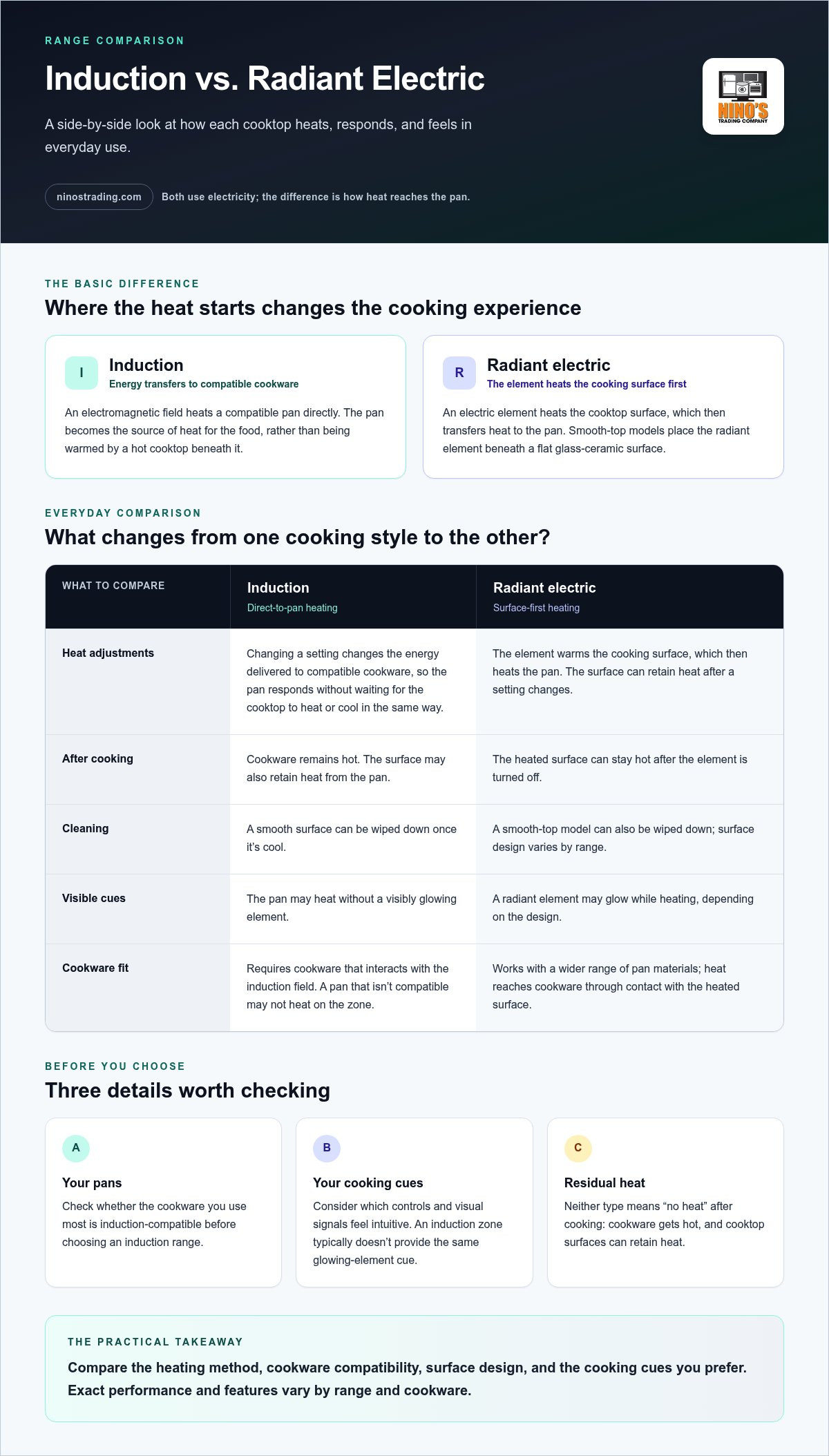
Both induction and conventional radiant ranges use electricity. The difference is how that electricity reaches the pan: induction transfers energy to compatible cookware, while a radiant electric element heats the cooking surface first. So, the practical question behind induction range vs electric range is not whether one uses electricity and the other doesn’t. It’s how each one heats your cookware.
Induction: An electromagnetic field transfers energy directly to compatible cookware, heating the pan.
Conventional radiant electric: An electric element heats the cooktop surface, which then transfers heat to the pan.
How an induction range heats a pan
Under an induction cooking zone, electrical energy creates a changing magnetic field. When compatible cookware sits over the zone, that field generates heat in the cookware itself. The pan becomes the source of heat for the food, rather than being warmed by a hot cooktop beneath it. The basics of this process are explained in Induction Cooking.
Cookware compatibility matters: the zone needs suitable cookware for the induction process to work. A pan that isn’t compatible may not heat on that zone, even if the range is powered on. Check the pans you use most before choosing an induction model.
How a conventional electric range heats a pan
On a conventional radiant range, electricity heats an element beneath or within the cooking surface. The surface warms, and heat passes from it into the pan and then to the food. With a smooth-top range, the element sits beneath a flat glass-ceramic surface. The glass is not what makes the range induction; it’s the heating method beneath it.
Electric ranges can use different surface and element designs. Some have smooth tops with radiant elements, while others use exposed coil elements. In either case, the element produces heat that reaches the cookware through contact, rather than transferring energy directly into a compatible pan as induction does.
That distinction can make appliance listings easier to read. “Electric” describes the power source, while “induction” identifies a particular way of transferring heat. A smooth glass surface alone doesn’t tell you which cooking method a range uses, so look for the range’s stated heating type as you compare options.
Induction vs. Radiant Electric: How Cooking Feels Day to Day
The difference shows up as you adjust heat, finish cooking, and clean the surface. Induction transfers energy to compatible cookware, while radiant electric heats the cooktop before the pan. Neither is the right choice for every cook, and the details of a particular range can shape the experience. The Department of Energy’s overview of induction cooking explains the technology behind that distinction.
| Everyday detail | Induction | Radiant electric |
|---|---|---|
| Heat adjustments | Changes at the pan as the zone transfers energy to compatible cookware. | The element and cooktop surface heat first, then transfer heat to the pan. |
| After cooking | The cookware remains hot; the surface may also retain heat from the pan. | The heated surface can stay hot after the element is turned off. |
| Cleaning | A smooth surface can be wiped down, once it’s cool. | A smooth-top model can also be wiped down; surface design varies by range. |
| Visible cues | The pan may heat without a visibly glowing element. | A radiant element may glow while heating, depending on the design. |
Temperature response, residual heat, and control
With induction, changing a setting changes the energy delivered to compatible cookware, so the pan responds without waiting for the cooktop to heat or cool in the same way. Radiant electric has an extra step: the element warms the cooking surface, which then heats the pan. That surface can retain heat after the setting changes, so timing and pan movement may matter during a recipe. Exact performance varies by range and cookware.
Cleaning, visibility, and everyday safety
A flat cooktop on either type can make routine wipe-downs straightforward, though it should be cool before cleaning. Induction doesn’t mean “no heat”: cookware gets hot, and the glass can warm from contact with a hot pan. Radiant surfaces also hold heat after cooking. Indicator lights, controls, and other safety features vary by model, so compare the details rather than assuming every range works alike.
On a smooth-top radiant range, you may see the element glow as it heats. An induction zone typically doesn’t provide that same visual cue, which can take some getting used to. For the induction range vs electric range decision, consider which controls and cooking signals feel intuitive to you, along with how you prefer to handle cleanup and residual heat.
Browse range and stove options from Nino’s Trading Company as you compare cooking styles and features.
Cookware, Cost, and Compatibility: The Trade-Offs to Weigh
Induction can offer responsive heat control, but it adds a cookware check that radiant electric doesn’t require. Conventional electric works with a wider range of pan materials, while induction needs cookware that interacts with its magnetic field. The best value depends on more than the range itself: consider what you already own, which functions you’ll use, and the specific features and condition of the range you’re comparing.
Cast iron, carbon steel, and many stainless steel pans may work with induction, while copper, aluminum, glass, and ceramic cookware generally won’t unless it’s designed with a compatible base. The NYSERDA guide to induction cooking offers more background on cookware and the technology. Radiant electric doesn’t rely on this magnetic compatibility, which can make it a more straightforward fit if your kitchen includes a mix of pan materials.
How to check whether cookware works with induction
Try a refrigerator magnet against the bottom of each pan. If it sticks, that’s a useful first clue, but it doesn’t guarantee the pan will perform well on every induction zone. Look for an induction-compatible label and consult the cookware maker’s guidance for a more reliable answer. Check the pans you use most, not just the ones you rarely bring out.
What may affect the overall value
If several everyday pans aren’t compatible, factor in the possibility of replacing some cookware. Then focus on range features that matter to your household, such as the controls and functions you’ll use regularly. Compare specific models rather than assuming one cooking method always costs more or offers better value.
Product condition is another practical factor. Nino’s Trading Company sells new-in-box, open-box, closeout, and cancelled-online-order appliances. These are not used or refurbished products. All appliances come with a full one-year parts-and-labor warranty, and extended parts-and-labor warranties are available for up to five years. Appliance prices typically run 40% to 60% below MSRP.
For more help weighing range options, see this stoves and ranges shopping guide. Comparing cookware compatibility, useful features, condition, and warranty can make the induction range vs electric range choice clearer without assuming there’s one right answer for every kitchen.
How to Decide Which Electric Range Fits Your Kitchen
A useful way to approach the induction range vs electric range choice is to start with your own cooking routine, then check which models fit your kitchen. Work through these steps before comparing individual ranges:
- Think about how you cook. If you often change heat during a recipe, induction’s direct response may appeal to you. If you prefer a familiar radiant cooking style or want to keep using a mix of cookware, conventional electric may feel like a more natural fit.
- Take stock of your pans. Note the sizes you use most and, for induction, which are compatible. If several everyday pans won’t work with induction, factor in the possibility of replacing cookware.
- Compare controls and cooking zones. Look at how settings are adjusted and whether the cooking zones suit the pans you typically use. Compare the controls and features on the actual models, not just the words “induction” or “electric.”
- Consider your oven routine. Think about the oven space and functions that matter for your usual meals, from everyday baking to larger dishes. Features vary by range, so compare model details against how you use your oven.
- Check cleaning preferences and kitchen fit. Decide whether a smooth cooktop suits your cleanup routine, measure the available range space, and note any nearby cabinets or other constraints that could affect fit.
Check fit and kitchen requirements before shopping
Measurements are a practical first step, but physical fit isn’t the only consideration. Electrical connections and installation details depend on both the home and the selected range. Review that model’s installation instructions and electrical requirements before making a decision. Don’t assume a range will connect the same way as the one it replaces; requirements can differ between models.
Keep your notes together as you compare: cooking habits, cookware, controls, zones, oven needs, cleaning preferences, space, and electrical setup. That gives you a more useful basis for comparing ranges than a feature label or a single selling point.
If you’re weighing fuel types beyond electric, this gas stove and electric stove comparison can help frame that decision. For electric range options, explore ranges and stoves and use your checklist to focus on what suits your kitchen.
Shopping for a Range: Compare Options and Take the Next Step
You don’t need to pick a universal winner in the induction range vs electric range comparison. Use a short checklist to focus on what matters in your kitchen, then compare individual listings on the same terms.
A final checklist for comparing range listings
- Cooking technology: Confirm whether the range uses induction or radiant electric heating, and make sure you understand the cookware needs.
- Fit: Compare the listed dimensions with your available space and review installation information for the specific model.
- Controls and features: Look at the controls, cooking zones, and oven features you’ll use, rather than relying on a general range label.
- Condition: Check how the individual appliance is described. Options include new-in-box, open-box, closeout, and cancelled-online-order products.
- Warranty: Compare the included coverage and any extended warranty option alongside the range’s stated features.
Compare only details that are clearly stated for each range. A feature available on one model shouldn’t be assumed to come with another, even if both use the same cooking technology.
Explore range options with a clear idea of what you need
Before browsing, keep your priorities handy: preferred cooking method, compatible cookware, space, useful controls, and oven needs. That makes it easier to compare options without getting distracted by features that don’t fit your routine. For additional shopping guidance, visit the Fayetteville ranges and stoves guide.
Nino’s Trading Company sells ranges and stoves across Arkansas and Oklahoma. All appliances come with a full one-year parts-and-labor warranty, with extended parts-and-labor warranties available for up to five years. Appliance prices typically run 40% to 60% below MSRP.
Use your checklist to explore Nino’s range and stove options and compare the details that matter for your kitchen.
Choose the Range That Fits Your Kitchen
The main difference in the induction range vs electric range decision is how heat reaches the pan: induction transfers energy to compatible cookware, while radiant electric heats the cooking surface first. Your cookware, preferred controls, cooking habits, and kitchen setup can all help point you toward the better fit.
As you compare ranges, look beyond the cooking method. Review each model’s features, condition, fit, and warranty information so you know what suits your needs. Nino’s Trading Company sells new-in-box, open-box, closeout, and cancelled-online-order appliances, not used or refurbished products. All appliances come with a full one-year parts-and-labor warranty, with extended parts-and-labor warranties available for up to five years.
Ready to compare options? Explore range and stove options at Nino’s Trading Company, serving shoppers in Little Rock, Fort Smith, Fayetteville, Springdale, Rogers, Bentonville, Tulsa, Oklahoma City, Broken Arrow, Yukon, Mustang, and Edmond.
Frequently Asked Questions
Is an induction range considered an electric range?
Yes. An induction range uses electricity, just as a radiant electric range does. The difference is the heating method: induction uses an electromagnetic field to heat compatible cookware, while a radiant element heats the cooktop surface before heat moves into the pan. Induction is therefore a type of electric cooking, not a separate fuel source like gas. Knowing that can make range listings easier to compare.
What is the difference between induction and a regular electric range?
Induction transfers energy directly to compatible cookware, while a conventional radiant electric range heats an element and cooktop surface first. That difference can affect how heat responds to setting changes, how much residual heat remains on the surface, and which cookware you can use. Both use electricity, but the cooking experience and cookware requirements differ. Individual controls, features, and surface designs vary by model.
Can I use my existing pots and pans on an induction range?
Possibly, but each pan needs to be compatible with induction. Cast iron, carbon steel, and many stainless steel pans may work, while cookware made from materials such as glass or copper generally won’t unless designed with a compatible base. Try a magnet on the pan’s bottom as a quick screening test. A sticking magnet is a helpful clue, but check the cookware maker’s guidance too.
Does induction cook faster than a regular electric range?
Induction can heat cookware and food more quickly than radiant electric in some cooking situations, but results depend on the range, cookware, and task. There isn’t one timing difference that applies to every model or recipe. If cooking speed is a priority, compare performance information for the specific ranges you’re considering. Also consider responsiveness: induction transfers energy to the pan, while radiant electric heats the cooking surface first.
Is an induction range safer than a conventional electric range?
Induction may reduce direct heating of the cooktop compared with radiant electric, but it doesn’t make cooking surfaces or cookware risk-free. The pan gets hot, and the surface can warm from contact with it. Radiant cooktops can retain heat after cooking as well. Indicator lights and other safety features vary by model, so review each range’s details and use care around hot cookware and surfaces.
Do I need special cookware for an induction range?
You need cookware that works with induction, but you may already own compatible pans. Many cast iron and stainless steel pans work, while some aluminum, copper, glass, or ceramic cookware may not. Check for an induction-compatible label or the cookware maker’s instructions. A magnet that sticks to the pan’s base is a useful first check, though it can’t guarantee the pan will perform ideally on every range.
Can I replace a radiant electric range with an induction range?
Often, a radiant electric range can be replaced with an induction range, but don’t assume every model will fit or connect the same way. Compare the appliance dimensions and review the selected range’s installation instructions and electrical requirements against your kitchen setup. Nino’s Trading Company sells ranges and stoves across Little Rock, Fort Smith, Tulsa, Oklahoma City, Fayetteville, Springdale, Rogers, Bentonville, Broken Arrow, Yukon, Mustang, and Edmond.


